
Fast over large areas
Flowing screed covers far more floor per hour than traditional sand-cement, keeping the programme moving.
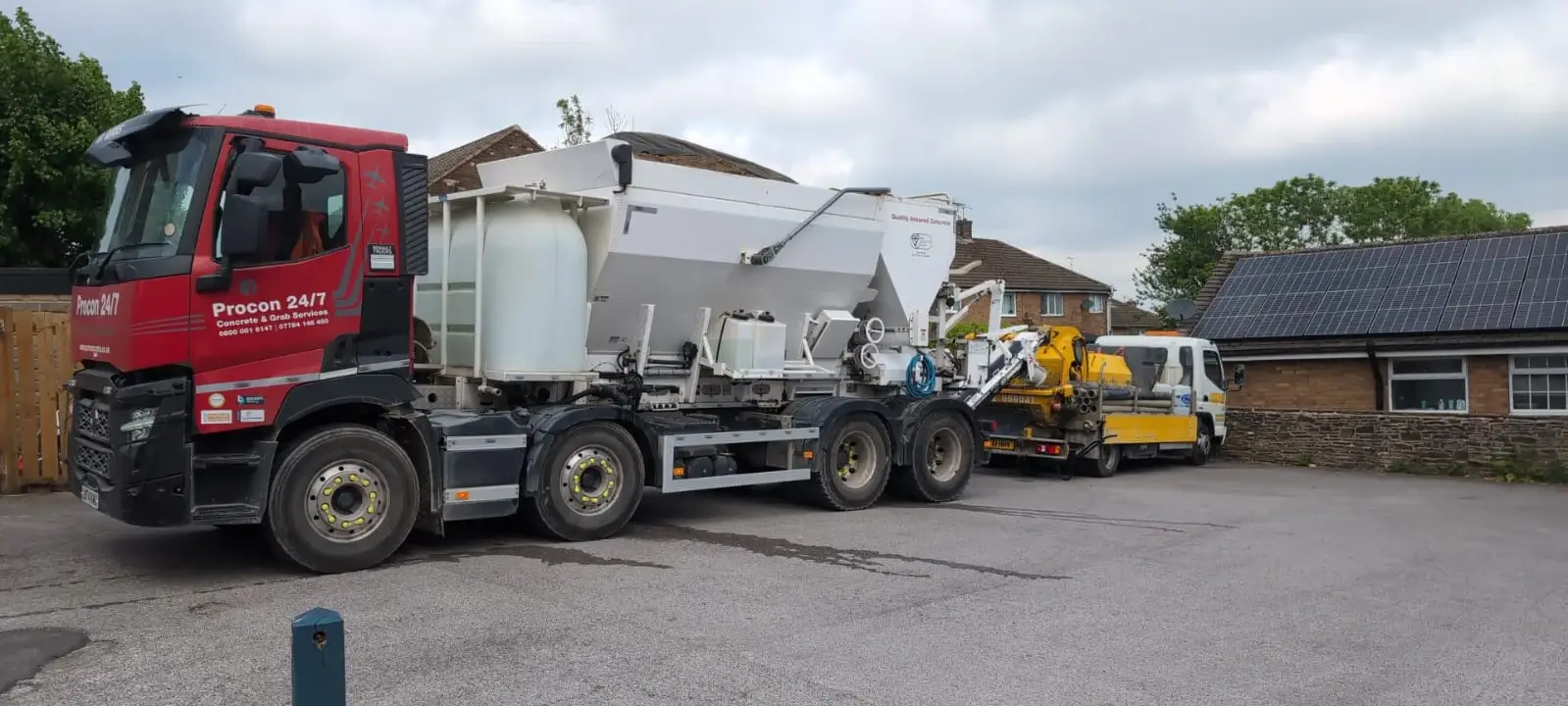
Fast, self-levelling flowing screed, ideal over underfloor heating and large floors.
Trusted by contractors, councils & developers






Liquid screed (also called flowing or self-levelling screed) pours fast over large floor areas and finds its own level, giving a flat, even finish with minimal labour. It is the modern choice over underfloor heating, where it flows around the pipes for excellent thermal contact. We batch it on-site to a consistent mix every time.
Flowing screed covers far more floor per hour than traditional sand-cement, keeping the programme moving.
Finds its own level for a flat, even floor with minimal trowelling or labour.
Flows around UFH pipes for excellent thermal contact and efficient, even heat.
Batched volumetrically to a consistent mix across the whole floor; pay only for what you lay.
Flowing screed surrounds the UFH pipework instead of being tamped around it, which removes voids and gives better thermal contact: the main reason it has become the default over UFH.
A flowing screed covers far more square metres per hour than hand-laying, which is usually the deciding factor on a commercial floor with a follow-on trade booked.
Self-levelling means the finish comes from the material rather than the trowelling, so flatness is more consistent across a big area.
Liquid screed usually costs more per cubic metre than sand-cement, and often less per finished floor.
Compare it per finished floor rather than per cubic metre. Give us the area, the depth and whether there is underfloor heating, and we will price it. Call 0800 001 6147.
We run liquid screed out of three depots. If your site is inside these postcode areas, ring us and we will tell you which depot is closest and roughly how long it takes to reach you.
5m³ of Gypsol Classic anhydrite liquid screed supplied and pumped on one order for a private customer in Harrogate. Laid at 40mm, flat and level in a single visit, with the line pump on the same docket.
Read the case studyThe things customers ask us most about liquid screed.
A common rule of thumb is around 1mm per day for the first 40mm, slowing considerably beyond that, so a 50mm floating screed is a matter of weeks, not days, before it is ready for a moisture-sensitive covering. Foot traffic is usually possible far sooner, commonly within 24–48 hours. Drying rates vary by product and by conditions, and cold or humid weather extends them, so always confirm with a moisture test rather than a calendar.
Liquid screed generally carries a higher material rate per cubic metre than sand-cement, but needs much less labour to place and finish and can often be laid thinner. Judged per finished floor rather than per cubic metre it frequently comes out level or cheaper, and it is usually faster. We meter by the cubic metre mixed with no full-load minimum: give us the area, the depth and whether there is underfloor heating for a price.
Liquid screed wins on speed over large areas, on flatness, and over underfloor heating, where it flows around the pipes instead of being tamped around them. Traditional sand-cement screed is more forgiving on small or irregular areas, can be laid to falls, and is generally cheaper per cubic metre. Floor size, whether there is UFH, and the programme usually decide it.
It is the usual choice. Because it flows rather than being compacted, it fills completely around the pipework with no voids, which gives better thermal contact and more even heat output. Products specify a minimum cover above the pipe, so check the data sheet for the depth. Follow the manufacturer’s commissioning sequence before running the heating.
Usually within 24–48 hours, depending on the product and the conditions. That is foot traffic only; it is not ready for loading, following trades or a floor covering at that point, and the drying time before covering is measured in weeks.
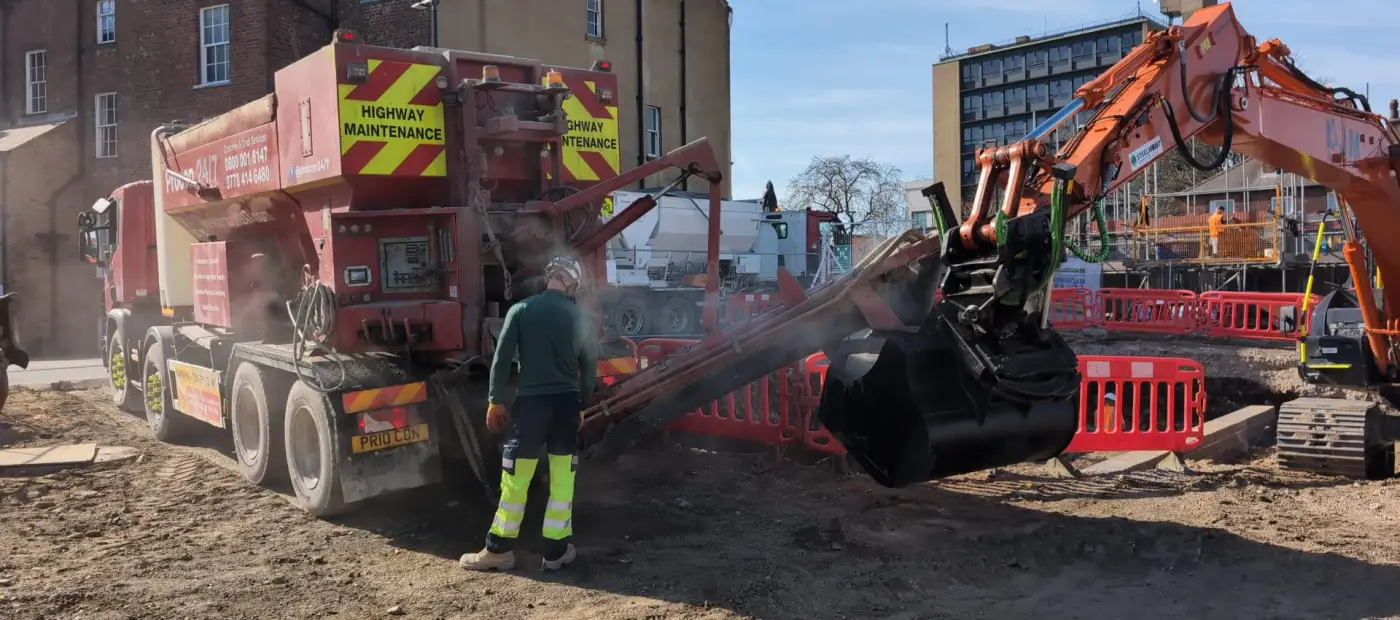
Same-day where we can, fresh every pour, across Yorkshire and the North West.
Leeds · Bradford · York · Sheffield · Wakefield · Manchester · Liverpool · Preston · Huddersfield · Halifax · & every site in between