
Stack without mortar
Lugs and recesses lock blocks together: no wet trades.
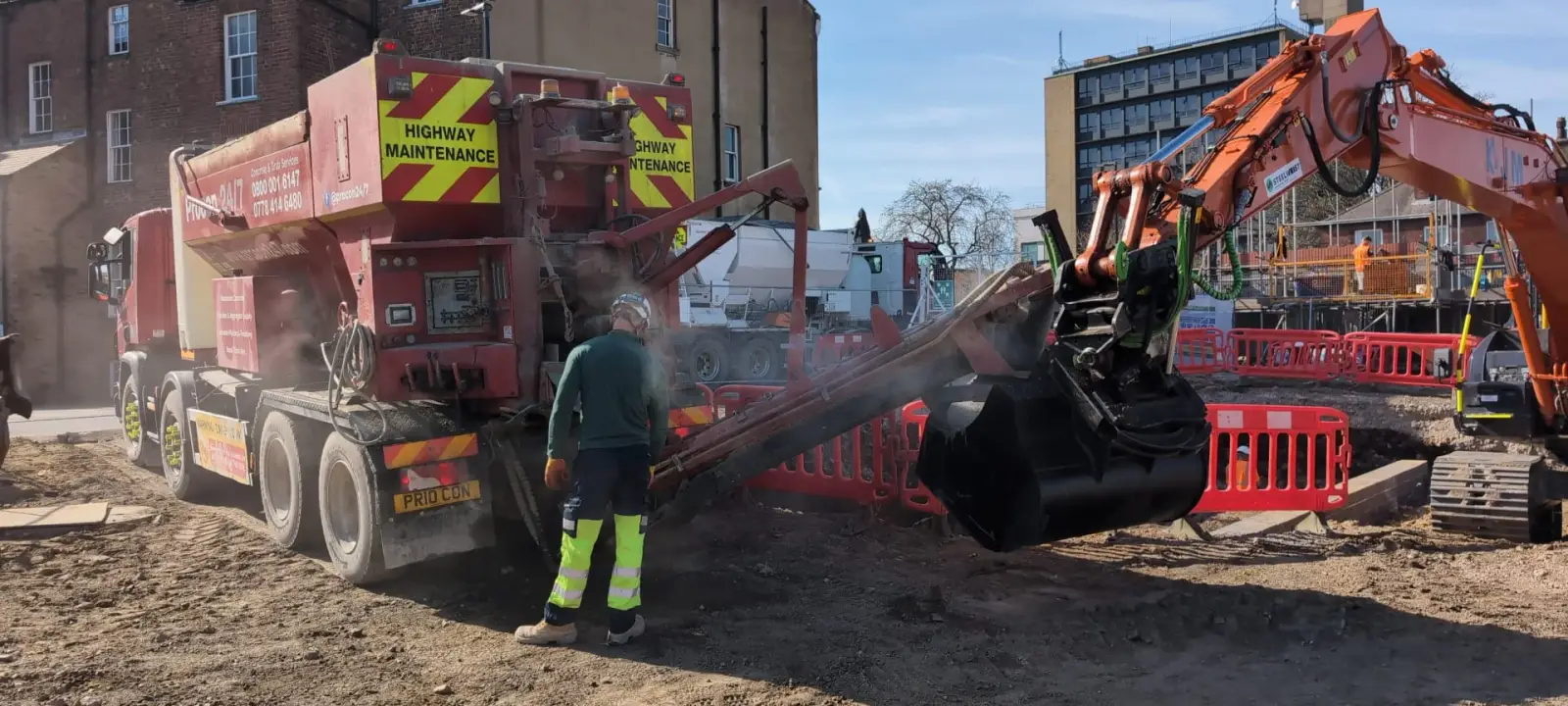
Heavy-duty interlocking blocks for retaining walls, bays and barriers.
Trusted by contractors, councils & developers






Interlocking concrete blocks (often called Lego blocks) stack without mortar to form retaining walls, storage bays, push walls and temporary barriers. They are strong, reusable and quick to install.
Lugs and recesses lock blocks together: no wet trades.
Build aggregate bays, push walls and retaining structures fast.
Unstack and move them as the site changes.
Walls go up in hours, not days.
Dividing a yard into bays for different materials. Push walls take the loading-shovel impact that a blockwork wall would not survive.
Level changes and stockpile retention. Anything load-bearing or over modest height needs engineering input on the design and the base.
Segregating plant routes from pedestrians, or securing a compound, on a site whose layout will change again in three months.
Blocks are bought or hired per block, and the economics turn on whether you get them back.
Tell us the wall length, the height and whether it is retaining or free-standing, and we will confirm block sizes, quantity and price. Call 0800 001 6147.
We run interlocking concrete blocks out of three depots. If your site is inside these postcode areas, ring us and we will tell you which depot is closest and roughly how long it takes to reach you.
The things customers ask us most about interlocking concrete blocks.
Large precast concrete blocks with cast lugs on top and matching recesses underneath, so they key into each other when stacked: the reason they are widely called Lego blocks. They build retaining walls, storage bays, push walls and barriers without mortar, and can be unstacked and moved when the site changes.
No mortar: the interlock and the weight do the work. They do need a firm, level base: a compacted stone base at minimum, and for a retaining wall or anything of height a properly designed foundation. A block wall is only as stable as what it stands on.
That depends on the block size, whether the wall is retaining or free-standing, and what is behind it. Anything retaining material, or above modest height, should be designed; surcharge from stored material or plant working against the wall changes the loading completely. We will not guess a safe height for you; get it engineered.
Push walls take the direct impact of a loading shovel pushing material against them, typically in aggregate, waste and recycling yards. Interlocking blocks suit this because the mass resists the push and individual damaged blocks can be swapped out rather than rebuilding a wall.
Yes, that is one of the main reasons they get specified. Unstack them with a machine and rebuild elsewhere. For sites whose layout changes, that makes them an asset that moves with you rather than a wall you demolish.
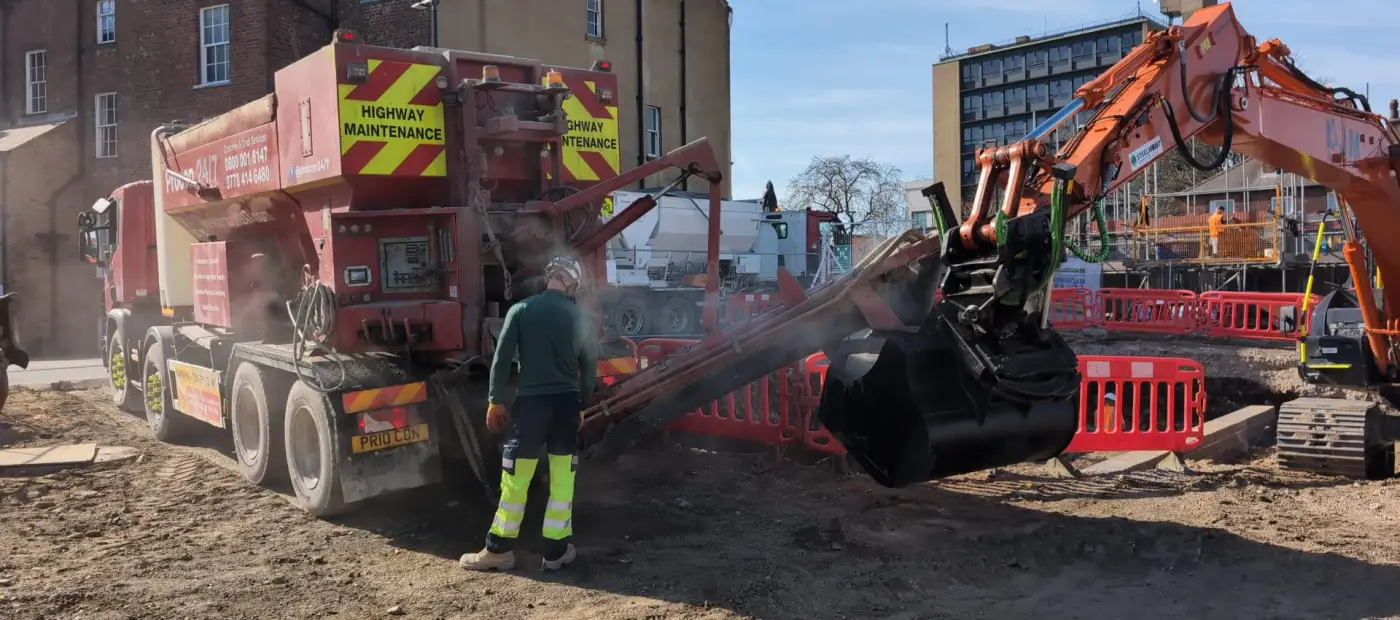
Same-day where we can, fresh every pour, across Yorkshire and the North West.
Leeds · Bradford · York · Sheffield · Wakefield · Manchester · Liverpool · Preston · Huddersfield · Halifax · & every site in between