
Lower embodied carbon
Industry figures put CEM III/A at roughly 30% to 60% less CO2 per tonne of cement than CEM I, depending on the slag content.
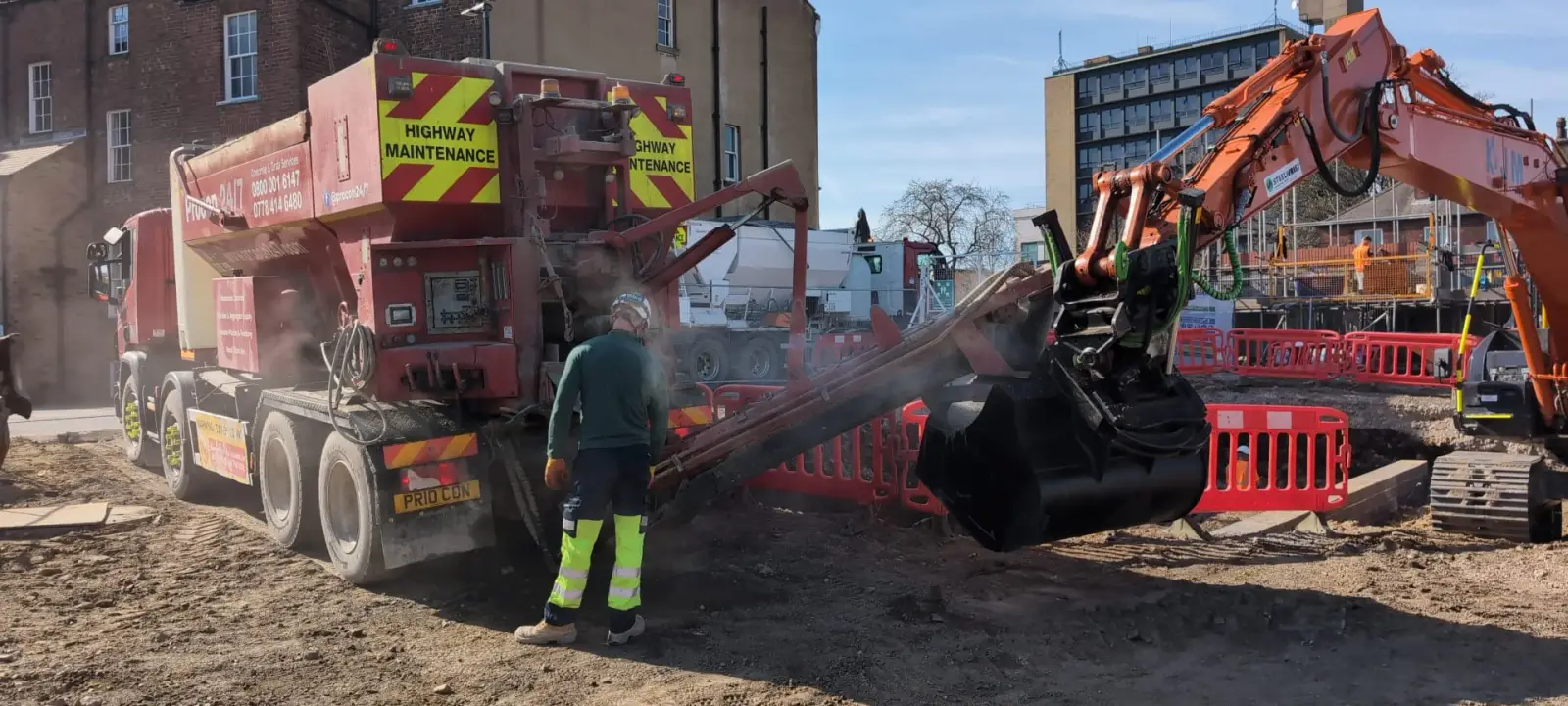
Concrete made with CEM III/A blastfurnace cement, mixed fresh on your site.
Trusted by contractors, councils & developers






CEM III/A is a blastfurnace cement. Between 36% and 65% of the Portland clinker is replaced with ground granulated blastfurnace slag (GGBS), a by-product of iron making. Clinker is where most of the carbon in concrete comes from, so swapping it out lowers the embodied CO2 of every cubic metre. CEM III/A is available from every Procon depot. We carry it on our volumetric mixers and batch it at your pour, so you get a lower carbon mix with the same on-site control as any other job we do.
Industry figures put CEM III/A at roughly 30% to 60% less CO2 per tonne of cement than CEM I, depending on the slag content.
GGBS concrete is denser and less permeable, with better resistance to chloride and sulfate attack.
Lower heat of hydration reduces the risk of thermal cracking in thick slabs, bases and mass fill.
Batched on site like every Procon pour. You pay for the volume you use and nothing goes back to the yard.
Main contractors and public sector clients increasingly ask how a scheme reduces embodied carbon. Specifying CEM III/A on foundations, slabs and drainage is one of the simplest reductions to make, with no change in how the concrete is placed.
Footings, ground beams, pile caps and drainage surrounds, where the better chloride and sulfate resistance of GGBS concrete is useful and early strength rarely holds up the programme.
Large pours generate heat as they cure. The lower heat of hydration of a CEM III/A mix keeps peak temperatures down and reduces the risk of thermal cracking.
CEM III/A is priced per cubic metre like any other mix we supply.
Ask about our current CEM III/A rate. Send the grade, volume and site postcode, or call 0800 001 6147.
We run low carbon concrete out of three depots. If your site is inside these postcode areas, ring us and we will tell you which depot is closest and roughly how long it takes to reach you.
The things customers ask us most about low carbon concrete.
CEM III/A is a blastfurnace cement defined in BS EN 197-1. It contains between 36% and 65% ground granulated blastfurnace slag (GGBS), with Portland clinker making up most of the rest. Because the slag replaces clinker, which is the carbon-intensive part of cement, it has a lower embodied carbon than CEM I Portland cement.
Mineral Products Association figures give CEM I Portland cement about 860 kg CO2e per tonne, and CEM III/A between about 350 and 594 kg per tonne depending on how much slag it contains. That is roughly 30% to 60% less per tonne of cement. The saving per cubic metre of concrete depends on the mix and how much cement it uses.
At 28 days, which is when concrete strength is specified and tested, a CEM III/A mix is designed to reach the same strength class. It gets there more slowly. Early strength at 3 and 7 days is lower, so allow more time before striking formwork or putting load on a slab, especially in cold weather.
Yes, but plan for it. Slag cements gain strength more slowly at low temperatures, so curing and protection matter more than with a CEM I mix. On a programme where early strength is critical in cold weather, talk to us about the right mix before you book.
They are two routes to a similar result. CEM III/A is a factory-blended cement with the slag already in it. GGBS can also be added to Portland cement at the concrete plant, which BS 8500 calls a cement combination. Both lower the clinker content of the mix and so its embodied carbon.
Slag cement concrete is usually paler than a CEM I mix, and it can show a blue-green tint in the first days after the pour that fades as it dries. That matters on exposed decorative finishes, and makes no difference on foundations or covered slabs.
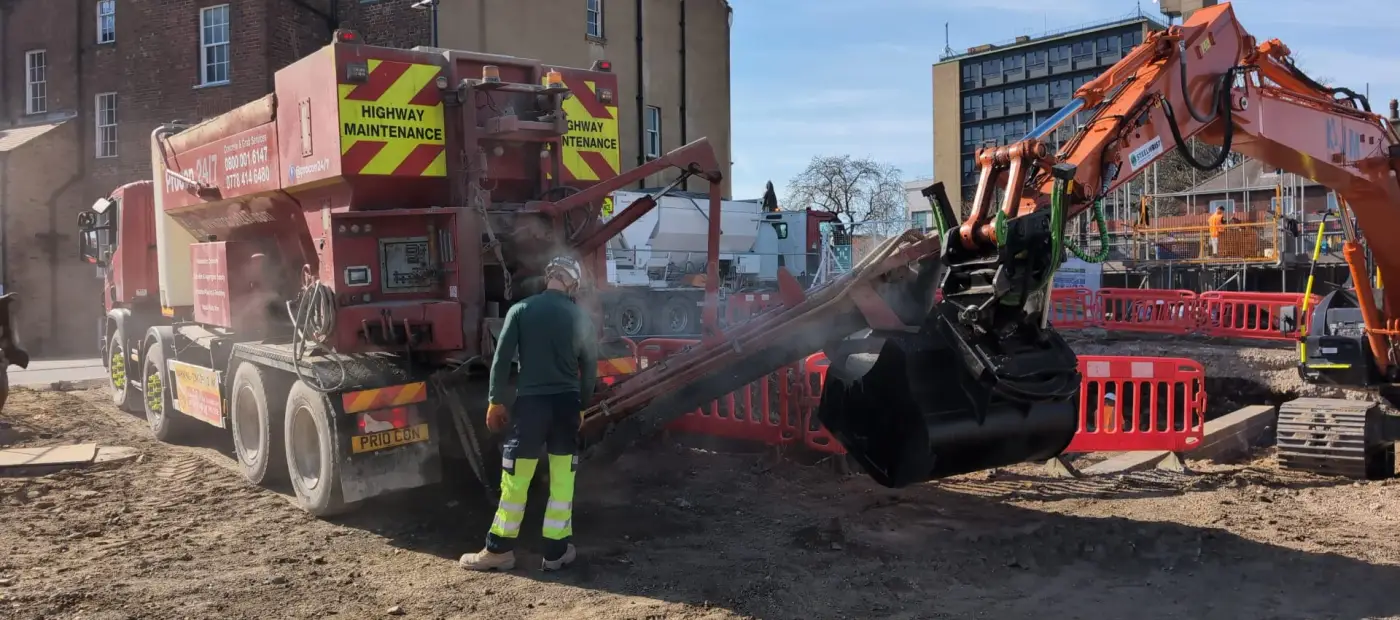
Same-day where we can, fresh every pour, across Yorkshire and the North West.
Leeds · Bradford · York · Sheffield · Wakefield · Manchester · Liverpool · Preston · Huddersfield · Halifax · & every site in between