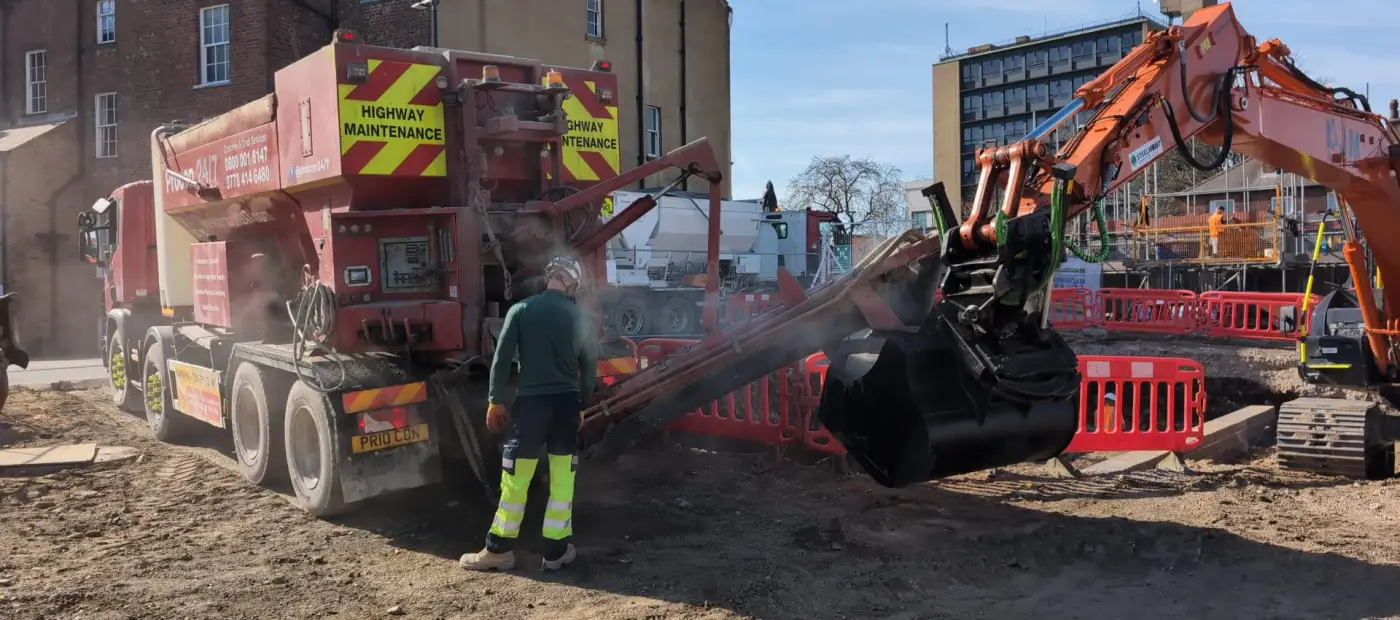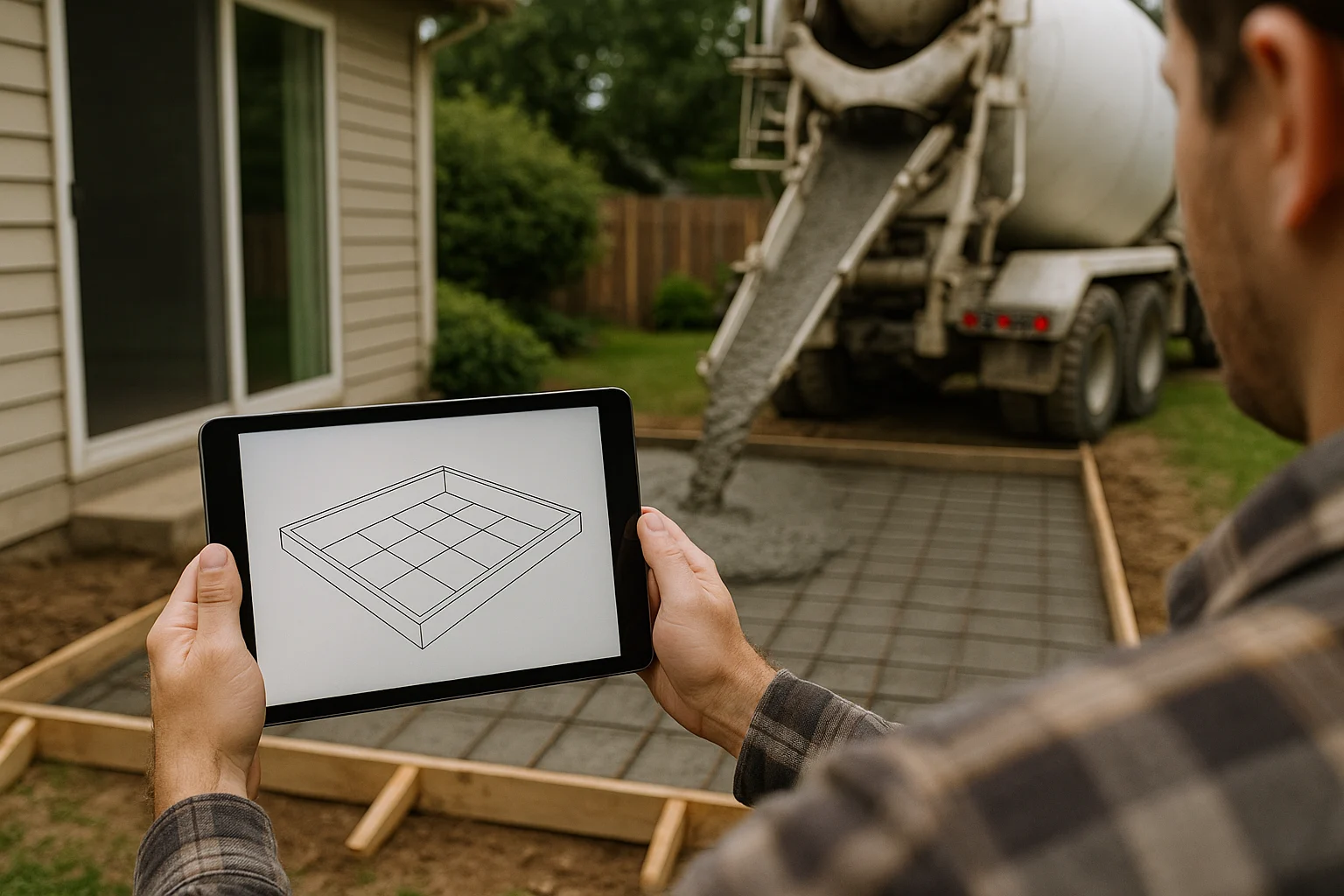
Ready-mix concrete (RMC) is concrete manufactured in a specialist batching plant to precise, engineered specifications, then delivered to your site in a drum mixer truck, ready to pour immediately. Unlike site-mixed alternatives, every batch is computer-controlled to consistent quality. The strength you specify is exactly what you receive.
This approach transforms concrete supply from a complex on-site manufacturing challenge into a simple, reliable delivery. Rather than sourcing materials, hiring equipment, and mixing batch after batch by hand, you focus on placing and finishing the concrete professionally.
How Is Ready-Mix Concrete Made?
Batching plants weigh cement, aggregates (sand and stone), water, and admixtures to precise tolerances using computer-controlled systems. The mix design (the proportions of each ingredient) is calculated to achieve the specified compressive strength, workability, and durability under BS EN 206 and BS 8500.
Once batched, the concrete loads into a drum mixer truck. The rotating drum keeps the mix agitated during transit to prevent premature setting. Under BS EN 206, the concrete should be discharged within 90 minutes of batching. From the moment water contacts cement, the hydration reaction begins and workability gradually reduces. Every load arrives with a delivery docket confirming specification, batch time, and volume.
What Are the Main Benefits of Ready-Mix Concrete?
Guaranteed Quality and Certified Strength
Computer-controlled batching plants measure every ingredient to precise tolerances, ensuring the optimal water-to-cement ratio for maximum strength and durability. Whether you need C20 for a garden path or C35 for a commercial foundation, every cubic metre meets your specification precisely. All Procon 24/7 ready-mix is BSI-certified, providing the documentation your building control officer or structural engineer may require.
Our guide to concrete strength grades and their uses explains which specification suits which application.
Time and Labour Savings
Sourcing separate cement, sand, and aggregate; hiring or buying mixing equipment; and then spending hours mixing batch after batch by hand is exhausting and error-prone. Ready-mix converts that into a single morning delivery. Professional drivers position the truck exactly where you need it, and the rotating drum keeps the mix consistent right up to the pour.
Zero On-Site Mess
DIY concrete mixing creates cement dust, leftover materials, and hardened waste. Ready-mix delivers exactly the quantity ordered: no surplus materials, no waste disposal, no clean-up beyond the usual.
Engineered Performance for Specialist Applications
Professional batching plants can produce specialist mixes impossible to achieve through DIY methods: rapid-setting concrete for time-critical work, air-entrained mixes for freeze-thaw resistance in UK winters, or high-strength grades for structural applications. Fibre-reinforced concrete is another option, adding steel or polypropylene fibres for crack resistance.
Understanding Workability: Slump Classes and the Slump Test
Concrete workability (how easily it flows and is placed) is specified under BS EN 206 using consistency classes. The most common measure is the slump test (BS EN 12350-2): a standard cone is filled with fresh concrete, inverted, and the distance the concrete drops is measured in millimetres.
Slump classes run from S1 (10–40mm, stiff mix for heavily reinforced sections) through to S5 (over 220mm, very fluid for pumped or complex formwork). When ordering ready-mix, specify the slump class alongside the strength grade, or ask our team to recommend the right class for your pour method and formwork design.
The slump test is typically run at the point of delivery to confirm the concrete matches the specification before pouring begins. This on-site verification is part of the quality assurance chain required under BS EN 206.
The 90-Minute Discharge Window
This is the most important timing consideration for ready-mix. From the moment water is introduced to cement at the batching plant, hydration begins. BS EN 206 and BS 8500 best practice targets discharge within 90 minutes, after which workability has typically degraded enough to compromise finish quality and long-term strength.
On busy sites, in heavy traffic, or on remote locations, this window can be eaten up in transit and queuing. If your site is remote, access is uncertain, or the pour is time-sensitive, ask about volumetric concrete: mixed fresh on-site so there is no discharge clock at all.
Is Ready-Mix or Volumetric Concrete Better for Your Project?
Ready-mix suits large, planned pours where volumes are known precisely and site access is straightforward. Volumetric concrete (mixed fresh on-site from a mobile batching unit) is often the better choice for smaller or flexible projects, since you pay only for what you use with no minimum order waste and no 90-minute discharge pressure.
Our detailed comparison guide on volumetric vs ready-mix concrete explains which suits which scenario. Use our free concrete calculator to estimate your volume before deciding.
What Applications Is Ready-Mix Concrete Used For?
- Domestic concrete: driveways, patios, garden slabs, shed bases
- Commercial concrete: foundations, structural floors, industrial yards
- Footings, strip foundations, raft foundations
- Agricultural hardstandings and barn floors
- Out-of-hours and time-critical infrastructure pours
For any application where delivery vehicles cannot directly access the pour area, combine ready-mix with our concrete line pump or boom pump service.
Procon 24/7 delivers across Yorkshire and the North West with same-day availability. Call our team to confirm grade, volume, and delivery window for your project.
Frequently Asked Questions About Ready-Mix Concrete
How do I order ready-mix concrete?
Contact our team with your location, required volume, strength grade, preferred delivery timing, and site access details. We can help determine technical specifications and calculate precise quantities. Same-day delivery is available across Yorkshire and the North West.
Is there a minimum delivery amount for ready-mix?
Most ready-mix deliveries have a practical minimum (typically 3–4m³) due to truck sizing. If you need less, our volumetric service delivers from 0.5m³ with no waste, often the better choice for smaller volumes.
How long can ready-mix concrete sit in the truck before it sets?
Ready-mix typically remains workable for 90 minutes from batching under BS EN 206 guidance, depending on weather conditions and mix design. Have your site prepared and crew ready before the truck arrives; concrete waits for nobody.
What concrete grade should I order for a driveway?
For a standard residential driveway, C25 or C30 with air-entraining admixtures for freeze-thaw resistance is the recommended specification. Our team will confirm the right grade based on your ground conditions and expected traffic loads.
What is a slump test and why does it matter?
A slump test (BS EN 12350-2) measures concrete workability by filling a cone with fresh concrete, removing the cone, and measuring how far the concrete slumps. BS EN 206 specifies workability in consistency classes S1 to S5. The test confirms the mix matches the specification before pouring begins.
What does the BS EN 206 delivery docket contain?
Every ready-mix load must arrive with a delivery docket under BS EN 206 Section 7.3. It records the concrete specification, volume, time of batching, water additions, admixtures used, and the plant declaration of conformity. Keep it for building control and structural engineer sign-off.
What is the difference between a designated mix and a designed mix?
Designated mixes (GEN 0–4, RC 25–50, PAV 1–2) are pre-defined in BS 8500 for common applications. Designed mixes specify performance directly: compressive strength class, exposure class, and maximum water-cement ratio. Structural engineers typically specify designed mixes; homeowners generally use designated mixes.