Self-compacting concrete (SCC), also called self-consolidating concrete and sometimes searched for under trade names such as Agilia, typically costs 15-25% more per m³ than an equivalent standard ready-mix grade. The premium reflects the higher cement and superplasticiser content needed to make concrete flow and self-level without vibration. This guide explains what drives the price, when it is worth specifying, and how to get an accurate quote.
Quick answer:
- Typical premium: 15-25% above the equivalent standard grade, from the extra cement and superplasticiser dosage.
- Indicative price range: roughly £104-£163/m³ material cost depending on grade, before delivery, pumping and VAT.
- Best for: congested reinforcement, complex or architectural formwork, and pours where vibration access is restricted.
Self-Compacting Concrete Price Per m³ by Grade
| Grade | Standard ready-mix (from) | Self-compacting equivalent (est. +15-25%) |
|---|---|---|
| C20/25 | £90/m³ | £104-£113/m³ |
| C25/30 | £100/m³ | £115-£125/m³ |
| C30/37 | £110/m³ | £127-£138/m³ |
| C35/45 | £120/m³ | £138-£150/m³ |
| C40/50 | £130/m³ | £150-£163/m³ |
Estimates only, based on Procon 24/7's standard grade pricing plus the typical SCC premium. Material cost only, excluding delivery, pumping and VAT at 20%. Get a site-specific quote for your exact mix design and volume, or see our full concrete price per m³ guide for standard-mix pricing.
What Is Self-Compacting Concrete?
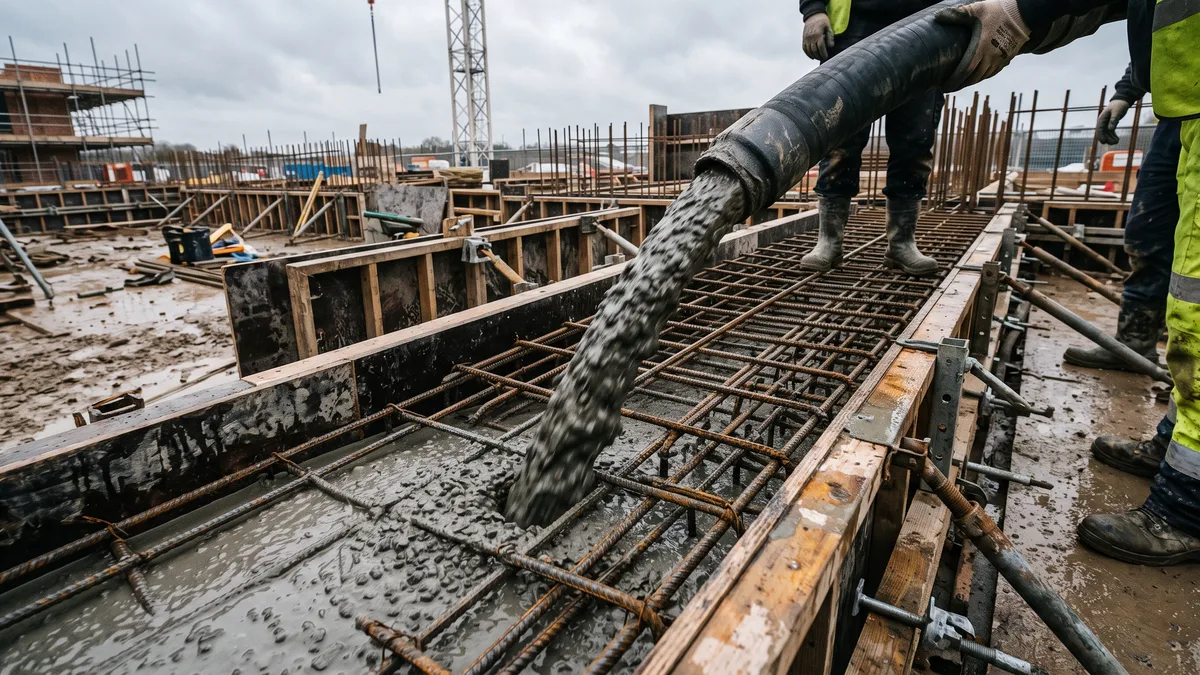
Self-compacting concrete is a highly flowable mix that fills formwork and passes around dense reinforcement entirely under its own weight, with no mechanical vibration needed. It is engineered through a higher fines and cement content, a lower water-to-cement ratio, and a significant dose of superplasticiser, which keeps the mix workable and free-flowing without adding excess water that would weaken the finished concrete.
The technology has been sold under various trade names since the 1990s, including Agilia. Whatever the brand name, the underlying material and specification (self-compacting or self-consolidating concrete, graded by flow class SF1 to SF3) is the same.
Why Does Self-Compacting Concrete Cost More Than Standard Ready-Mix?
Higher cement and fines content: Achieving self-levelling flow needs more fine material and cement paste than a standard mix, both of which cost more than coarse aggregate.
Superplasticiser dosage: SCC relies on a significant dose of high-range water-reducing admixture to achieve flow without extra water. Read our full guide to concrete admixtures for how superplasticisers work.
Tighter quality control and testing: Instead of the standard slump test, SCC batches are checked with a slump-flow test, and mix consistency has to be controlled more precisely batch to batch. Our guide on why the concrete slump test matters covers the difference in testing approach.
Mix design and trial batching: Getting a self-compacting mix right for a specific reinforcement density and formwork often needs trial batches before the main pour, adding to the specification cost on complex jobs.
When Should You Specify Self-Compacting Concrete?
Congested reinforcement: Where rebar spacing is tight, SCC flows through and around the cage without leaving voids, avoiding the honeycombing risk of vibrating standard concrete into a dense cage. See our concrete reinforcement guide for how rebar density affects mix choice.
Complex or architectural formwork: Intricate shapes, thin sections, and exposed decorative finishes benefit from a mix that fills every corner without vibration marks or blowholes.
Restricted access for vibration: On sites where a poker vibrator cannot reach every part of the formwork, SCC removes the risk of under-compacted concrete entirely.
Noise-sensitive sites: Vibration is one of the noisier parts of a standard pour. SCC placement is significantly quieter, which matters on occupied or noise-restricted sites.
For most straightforward domestic slabs, footings and driveways, standard ready-mix or volumetric concrete remains the more cost-effective choice. SCC earns its premium on the applications above, particularly commercial concrete with dense reinforcement or demanding finish requirements.
Self-Compacting Concrete vs Ready-Mix vs Volumetric
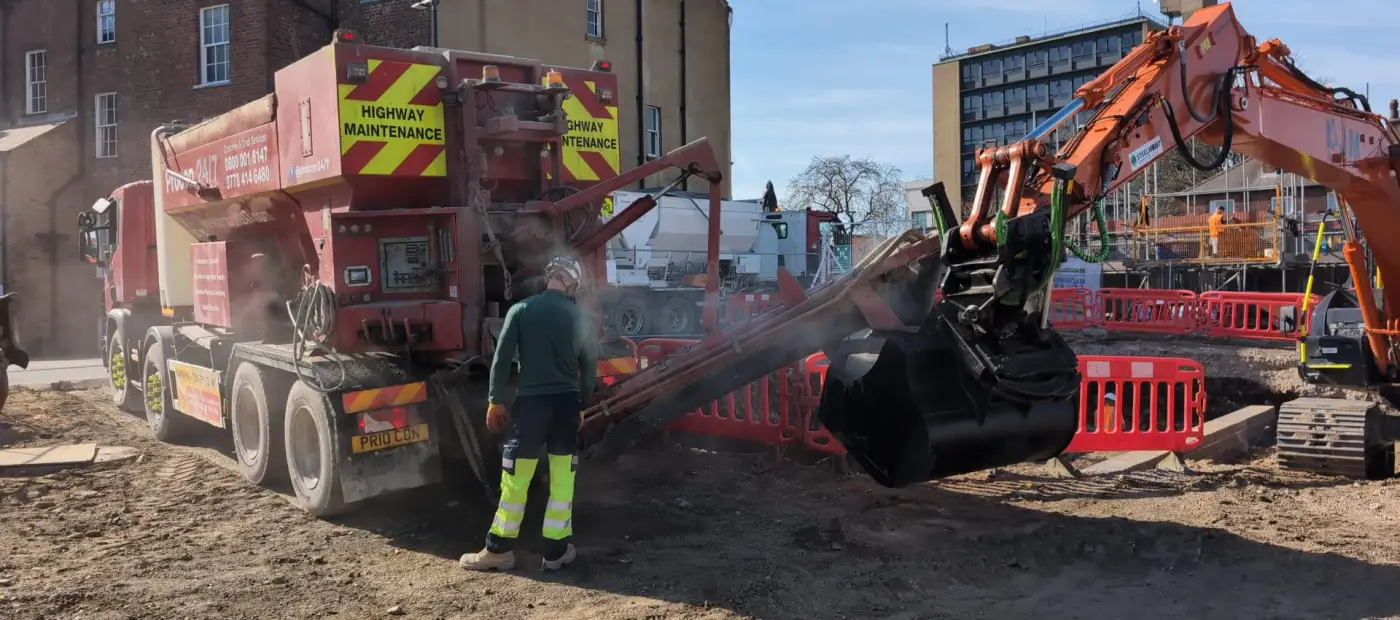
Self-compacting mixes can be supplied through either delivery route. Ready-mix concrete suits larger pours where the volume and reinforcement layout are fixed in advance. Volumetric concrete lets the superplasticiser dose and flow class be fine-tuned on-site at the point of pour rather than locked in at the batching plant, which is useful when access or reinforcement conditions only become clear once the truck is on site.
How to Get an Accurate Self-Compacting Concrete Price
- Confirm your grade and application. Specify the structural grade (typically C25/30 to C40/50) and whether the pour involves congested reinforcement, an architectural exposed finish, or restricted access.
- Confirm reinforcement density and formwork complexity. Denser rebar cages need a higher flowability class (SF1-SF3), which changes the mix design and the price.
- Confirm volume and delivery method. Ready-mix suits larger, precisely known volumes; volumetric suits smaller or variable pours with no part-load surcharge.
- Confirm access and placement method. Direct pour, line pump or boom pump each change the total delivered cost, separately from the concrete itself.
- Request a site-specific quote. Use the concrete calculator to confirm volume, then contact the team to confirm grade, flow class and total delivered price.
Frequently Asked Questions About Self-Compacting Concrete Pricing
Is Agilia the same as self-compacting concrete?
Agilia is a trade name some suppliers use for self-compacting concrete (SCC), also called self-consolidating concrete. It is not a different material, it is the same flowing, self-levelling technology marketed under a brand name. Procon 24/7 supplies self-compacting concrete specified to the flow class and grade your project needs, not tied to any single brand name.
How much does self-compacting concrete cost per m³ in the UK?
Self-compacting concrete typically costs 15-25% more per m³ than the equivalent standard ready-mix grade, reflecting the extra cement and superplasticiser content. For a C25/30 mix, that is roughly £115-£125/m³ material cost, before delivery, pumping and VAT. Get a site-specific quote for your exact mix design.
Does self-compacting concrete need vibration?
No. Self-compacting concrete is designed to flow under its own weight and fill formwork, including around congested reinforcement, without mechanical vibration. That is its main advantage over standard concrete on complex pours.
Can Procon 24/7 supply self-compacting concrete?
Yes. Our volumetric concrete service allows superplasticiser dosage and flow class to be adjusted on-site at the point of pour, and self-compacting mixes are also available via ready-mix. Contact our team to discuss the flow class and grade your project needs across Yorkshire and the North West.
What formwork is needed for self-compacting concrete?
Formwork must be fully sealed and able to withstand the full hydrostatic pressure of a flowing liquid mix, since self-compacting concrete does not stiffen during placement the way standard concrete does. Discuss formwork design with your supplier before ordering.
Is self-compacting concrete tested differently to standard concrete?
Yes. Instead of the standard slump test, self-compacting concrete is assessed with a slump-flow test, which measures how far the mix spreads under its own weight rather than how far it subsides.
Get an Accurate Self-Compacting Concrete Quote
Self-compacting concrete costs more per m³ than standard ready-mix, but earns that premium back on jobs with dense reinforcement, complex formwork or restricted vibration access. Confirm your grade, flow class and volume, then speak to Procon 24/7 for a site-specific price across Yorkshire and the North West.
- Use our free concrete calculator to confirm your volume before requesting a quote.
- Read our full concrete price per m³ guide for standard-mix pricing.
- Speak to Procon 24/7 for same-day delivery and a site-specific self-compacting concrete quote.