Waterproofing a concrete block wall is a five-step process: clean, repair, dry, apply, and cure. Skipping or rushing any one of these steps is the most common reason a waterproofing job fails within a year or two instead of lasting the 10-25 years a properly applied system should. This guide covers the practical steps in detail, alongside the tools and drying times involved.
For the background on why concrete blocks need waterproofing at all, and which system suits which application, see our full guide to whether concrete blocks are waterproof.
Step 1: Clean the Wall Thoroughly
Every waterproofing system needs a clean substrate to bond to. Remove dirt, moss, loose mortar, and efflorescence, the white powdery salt deposit left as moisture evaporates from the block surface. A stiff wire brush handles most walls. A pressure washer speeds up larger areas, but use a wide fan nozzle and moderate pressure, since a narrow jet can drive water deeper into the blocks and extend your drying time.
Step 2: Repair Cracks and Mortar Joints First
Mortar joints are usually more porous than the blocks themselves, and an active crack defeats any coating applied over it. Repoint failed mortar and fill cracks with an appropriate masonry filler before moving on. This step is easy to skip and is the single most common cause of early waterproofing failure.
Step 3: Let the Wall Dry Fully
Most waterproofing systems, particularly cementitious coatings, need a genuinely dry substrate to bond correctly. Allow at least 24-48 hours after cleaning or repointing in mild, dry weather. Cold or damp conditions extend this significantly, and applying over a damp wall is another common cause of premature failure.
Step 4: Apply Your Chosen Waterproofing System
Which system to use depends on the application:
- Waterproof sealants and paints: Brush or roll on. Suitable for above-ground walls with low water pressure, such as garden walls and above-ground external walls.
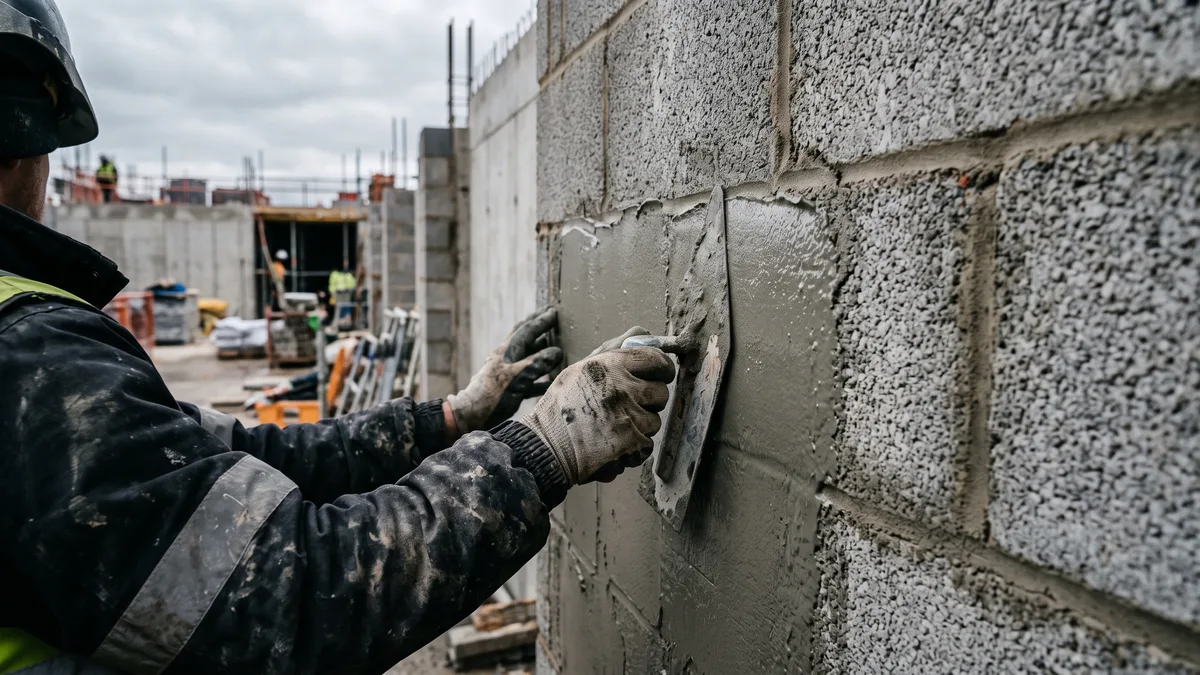
- Cementitious coatings: Trowel on like a thick render. The standard choice for basements and any wall facing significant hydrostatic (water) pressure.
- Membrane systems: Fixed or liquid-applied sheet systems for the most demanding below-ground applications, stopping water before it reaches the block at all.
Whichever system you choose, follow the manufacturer's stated coverage rate per m². Thinning a coating to stretch coverage is the fastest way to turn a 20-year system into a 2-year one. If you are specifying concrete for the wall itself, our guide to waterproofing admixtures covers reducing permeability at the mix stage, before the wall is even built.
Step 5: Allow Full Cure Before Backfilling or Exposing to Water
Most systems need 24-72 hours to cure fully before they can be backfilled against or exposed to standing water. Check the specific product data sheet, since cure time varies by product, thickness applied, and temperature. Backfilling too early is a common cause of coating damage on basement and retaining walls.
Frequently Asked Questions
What tools do I need to waterproof a concrete block wall?
A stiff wire brush or pressure washer for cleaning, a pointing trowel for mortar repairs, a masonry brush or roller for sealants and paints, and a steel trowel for cementitious coatings. For membrane systems, follow the manufacturer's specified tools and fixings.
How long does it take to waterproof a concrete block wall?
For a typical domestic wall, allow a full weekend: cleaning and repairs on day one, application on day two once the wall is dry, and the manufacturer's cure time before backfilling or exposure to water. Larger or basement walls take longer due to drying and cure times between coats.
Can I waterproof a concrete block wall myself?
Yes, for above-ground walls using sealants, paints or cementitious coatings, this is a realistic DIY job if you follow surface preparation properly. Below-ground basement waterproofing against significant hydrostatic pressure is higher risk and often worth a professional assessment first. See our basement waterproofing guide for the below-ground specifics.
What happens if I skip surface preparation?
Waterproofing coatings applied over dirt, efflorescence or loose mortar fail early, sometimes within a single season. Surface preparation is the single biggest factor in how long a waterproofing system actually lasts, more than the specific product chosen.
Get the Right Concrete for the Job
If you are building or repairing a block wall as part of this project, Procon 24/7 supplies domestic concrete and commercial concrete across Yorkshire and the North West, including waterproof admixture mixes specified at the point of pour.