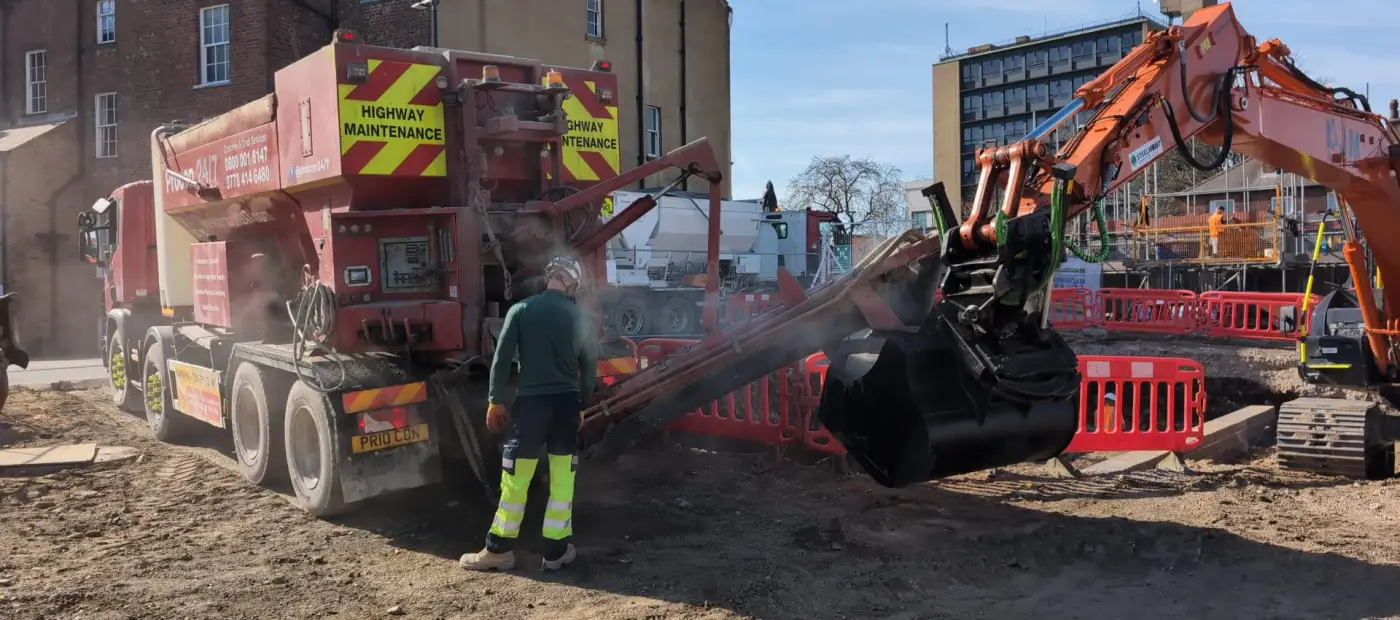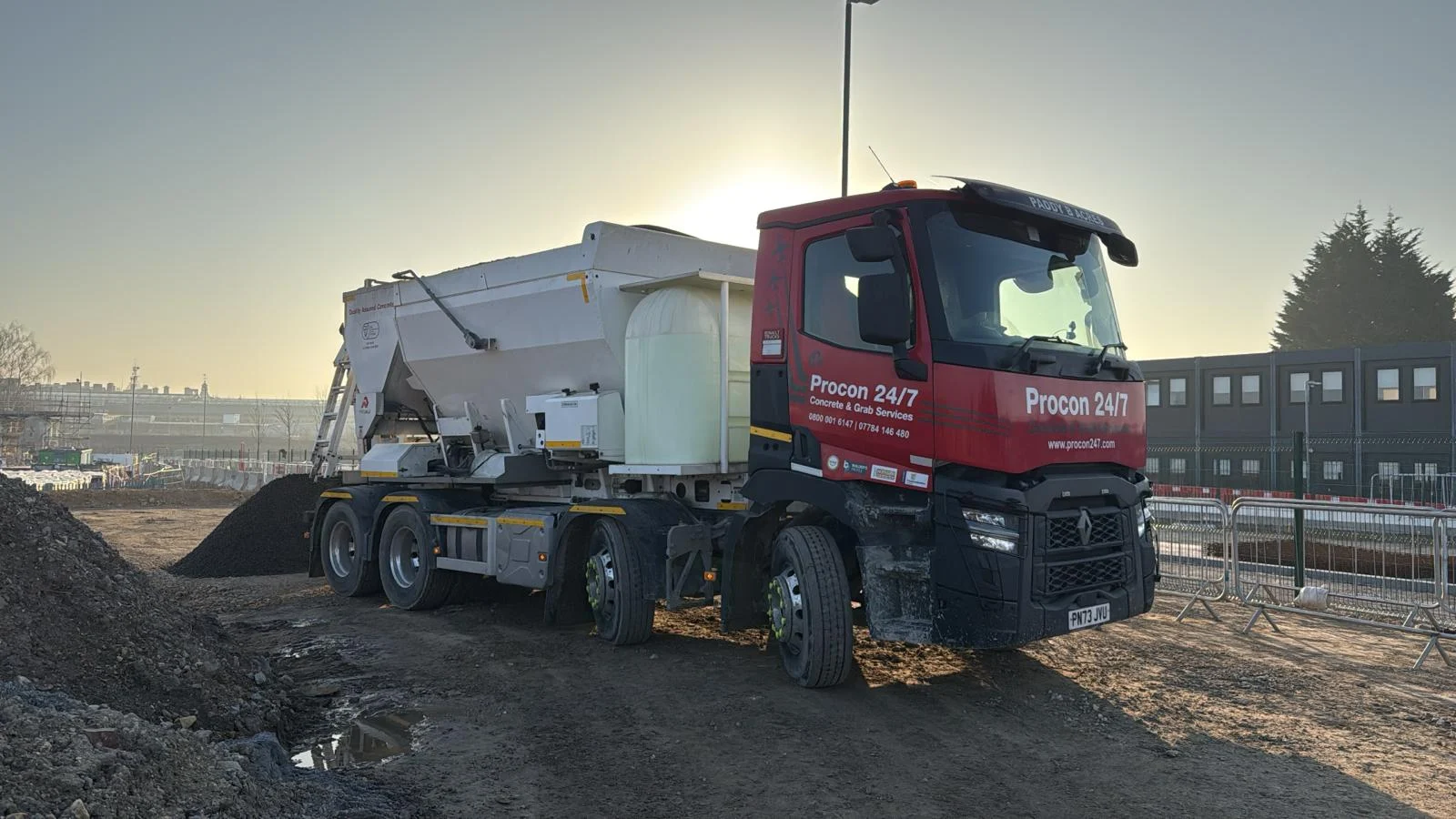
A volumetric concrete mixer is a mobile batching plant that carries separate materials (cement, sand, various aggregate sizes, and water) in individual compartments and mixes them on demand at the job site. Unlike a drum wagon (a conventional ready-mix truck) that arrives with pre-mixed concrete and a fixed 90-minute working window, a volumetric mixer produces fresh concrete continuously as it is needed. The result is zero transit time, no risk of concrete setting en route, and the ability to adjust specifications mid-pour.
Volumetric Mixer vs Drum Wagon: What Is the Difference?
A drum wagon loads concrete that has already been batched at a fixed plant, often miles away. The rotating drum keeps the mix agitated during transit, but the chemistry has already started. Under BS EN 206, the concrete should be discharged within 90 minutes of batching; once that window closes, workability drops and strength development is compromised. The driver carries the delivery docket confirming batch time; you need to be ready to receive and place the concrete the moment the truck arrives.
A volumetric mixer carries raw materials only. Nothing is mixed until you need it. The operator inputs the required specification into the onboard computer, and calibrated augers proportion and combine the ingredients at the chute, in real time. The concrete entering your formwork is seconds old. There is no 90-minute discharge clock because the concrete does not exist until you call for it.
How Does the Mixing Process Work Inside a Volumetric Truck?
The operator inputs the required concrete specification (grade, slump class, admixture requirements) into the truck's computerised control system. Calibrated conveyor belts and auger systems then transport precise quantities from each material compartment into the mixing drum in the correct sequence and proportion. Material measurement accuracy is typically within 1–2%, ensuring consistent quality batch to batch.
Key components in the system include:
- Aggregate bins: Usually three compartments holding different stone and sand grades, arranged for gravity-assisted feeding into the mixing system.
- Cement storage: A sealed compartment protecting cement from moisture. Many modern units use pneumatic cement delivery for dust-free operation.
- Water system: Fresh water tanks with metered delivery. Advanced units adjust water content based on moisture readings from the aggregates, maintaining the target water-cement ratio automatically.
- Admixture tanks: Separate metered tanks for accelerators, retarders, air-entrainment agents, or other admixtures, added in precise doses per batch.
- Mixing drum: Materials combine here, with mixing time and speed adjusted per batch specification.
- Control system: Computerised management of all material ratios, mixing sequences, and batch records, producing documentation equivalent to a batching plant delivery docket.
Materials only enter the mixing drum when concrete is required; each batch is as fresh as possible, with maximum workability and full hydration potential.
What Are the Main Advantages of Volumetric Concrete Over Ready-Mix?
Zero waste: Concrete is mixed only as needed. Over-ordering (one of the most common cost inefficiencies in domestic and small commercial concrete work) is eliminated. You pay only for what is placed. This makes volumetric particularly cost-effective for projects where quantities are uncertain or where multiple small pours are required across a project duration.
No 90-minute discharge constraint: Ready-mix concrete has a finite workable life from the point of batching at the plant, typically 90 minutes under BS EN 206 best practice, reduced in hot weather. Volumetric trucks carry raw materials, not mixed concrete, so there is no discharge clock running. This is particularly valuable for remote sites or locations with unpredictable access.
Multiple specifications from one delivery: A single volumetric truck can produce C20 for a footing, C25 for a slab, and C35 for a structural column from the same load, by adjusting the mix design between batches. This eliminates the need for multiple deliveries and complex scheduling coordination.
On-site slump verification: A slump test (BS EN 12350-2) can be run at the chute immediately before the concrete enters the formwork. This confirms workability meets the specification at the point of placement, not 30 minutes earlier at the plant gate.
Hot weather advantage: In warm conditions, volumetric mixing avoids the risk of concrete stiffening during transport. See our guide on concrete in hot weather for why transit time becomes critical above 25°C.
When Is Volumetric Concrete the Better Choice?
For a detailed comparison of both methods across different project types, see our guide on volumetric vs ready-mix concrete. In summary, volumetric is typically preferred when:
- Project quantities are uncertain or subject to change
- Multiple concrete grades are required in the same day
- Site access is remote or unreliable for conventional delivery
- Work must continue regardless of traffic or batching plant schedules
- Minimising waste is a project or environmental priority
- The pour must happen at night, on a weekend, or at short notice
For night and weekend pours (highway lane closures, rail possessions, airside airport works), volumetric supply is the practical default. There is no batching plant to staff. The truck is self-contained and can be dispatched at any hour. Procon 24/7 provides out-of-hours concrete supply across Yorkshire and the North West around the clock. See our guide on how 24/7 concrete delivery actually works for the full breakdown of what it costs and who needs it.
Ready-mix concrete remains the best choice for large, single-specification pours with predictable volumes and good access, particularly for commercial slabs, major foundations, and infrastructure where the batching plant can provide consistent output at high volume. Procon 24/7 offers both services: volumetric concrete and ready-mix concrete across Yorkshire and the North West.
Use our concrete calculator to estimate volumes before choosing your delivery method: the calculation often reveals whether volumetric or ready-mix is the more economical option for your specific quantities.
Frequently Asked Questions About Volumetric Concrete Mixers
How accurate is volumetric concrete mixing?
Modern volumetric systems measure materials to within 1–2% accuracy using calibrated conveyor belts and auger systems. Each batch is recorded by the control system, providing documentation comparable to batching plant certificates for quality assurance purposes.
Can volumetric concrete match the quality of plant-batched ready-mix?
Yes. Volumetric mixing produces concrete that meets the same British Standards as plant-batched ready-mix. In fact, the absence of transit time means the concrete placed on-site is fresher than equivalent ready-mix, with full workability and hydration potential.
What concrete grades can a volumetric truck produce?
Standard volumetric trucks can produce any grade from C10 (mass fill) through to C40 high-strength structural mixes, as well as specialty mixes including fibre-reinforced concrete, air-entrained mixes for freeze-thaw resistance, and mixes with accelerating or retarding admixtures.
Is volumetric concrete more expensive than ready-mix?
The per-cubic-metre cost of volumetric concrete is comparable to ready-mix. The economic advantage comes from waste elimination: you pay only for what is placed, not what is ordered. For projects where quantities are difficult to estimate precisely, volumetric often proves less expensive overall.
What is the difference between a volumetric mixer and a drum wagon?
A drum wagon arrives with pre-mixed concrete inside a rotating drum, subject to the 90-minute discharge limit under BS EN 206. A volumetric mixer carries dry raw materials in separate compartments and batches concrete on-site on demand; there is no pre-mixed load and no discharge clock. You get fresher concrete and pay only for what you pour.
Does volumetric concrete comply with BS EN 206?
Yes. Volumetric concrete is produced to the same standards as plant-batched concrete. Each batch is measured by calibrated computer-controlled systems, and delivery documentation records the mix proportions, volumes, and time of batching.
Can a volumetric truck supply concrete at night or on a weekend?
Yes, and this is one of the strongest arguments for volumetric over ready-mix for out-of-hours work. There is no batching plant to staff or schedule outside business hours. The truck is self-contained. Procon 24/7 operates around the clock for night highway works, rail possessions, and urgent pours. See our out-of-hours concrete service.
For small pours, or where a mixer truck cannot reach the work, the same on-site mixing is supplied as barrow mix concrete, discharged in barrow-sized amounts you can wheel into place.
We run volumetric mixers across South Yorkshire's manufacturing belt too. See volumetric concrete in Rotherham for factory, warehouse and hardstanding pours off the M1 and M18.