The concrete block sits so quietly in our built environment that we rarely pause to consider its remarkable journey. Yet this unassuming building component represents one of construction’s greatest democratising forces — transforming how ordinary people could afford to build solid, permanent structures. The story runs from a Victorian bricklayer’s workshop in Leeds to the precision-engineered blocks used across Yorkshire and the North West today.
Who Invented Concrete Blocks and Where Did Portland Cement Come From?
Before any concrete block could exist, the construction world needed a reliable binding agent. That breakthrough came from an unlikely source: a Victorian bricklayer named Joseph Aspdin, working in Leeds. In 1824, Aspdin patented Portland Cement — naming it after the prestigious Portland stone it resembled when set. This hydraulic cement could harden underwater and provided unprecedented strength and durability.
Portland Cement didn’t just enable concrete blocks — it made them inevitable. For the first time, builders had a binding agent that created artificial stone of remarkable consistency. The stage was set for industrialised construction.
That next step came from an American entrepreneur named Harmen S. Palmer. In 1900, Palmer patented a machine that manufactured hollow concrete blocks — and unknowingly triggered a construction revolution. His blocks were lighter than solid alternatives, provided superior insulation, and required fewer materials to produce. Most importantly, they could be manufactured consistently, making quality masonry accessible to anyone with basic training rather than skilled stonemasons alone.
How Did Industrial Waste Transform the Concrete Block Industry?
The early 20th century witnessed concrete blocks’ explosive rise, fuelled by an unexpected ally: industrial waste. As coal-fired power stations proliferated, they generated vast quantities of cinder — a lightweight material perfect for block production.
These “cinder blocks” became the construction industry’s great equaliser. In the UK, similar blocks made from furnace clinker became known as “breeze blocks,” transforming the building landscape through their affordability and availability. This was an early example of circular economy thinking: industrial waste becoming a valuable construction material.
Post-war reconstruction cemented their dominant position. Britain’s urgent need to rebuild bombed cities and house returning servicemen created unprecedented demand for quick, affordable construction. Concrete blocks answered perfectly, enabling rapid construction of millions of homes, schools, and public buildings across Yorkshire, the North West, and nationwide.
How Have Modern Concrete Blocks Evolved Since 1900?
Today’s concrete blocks bear little resemblance to Palmer’s original vision. They represent sophisticated engineered products tailored for specific applications — from high-strength structural units supporting multi-storey buildings, to lightweight aerated blocks with exceptional insulation properties.
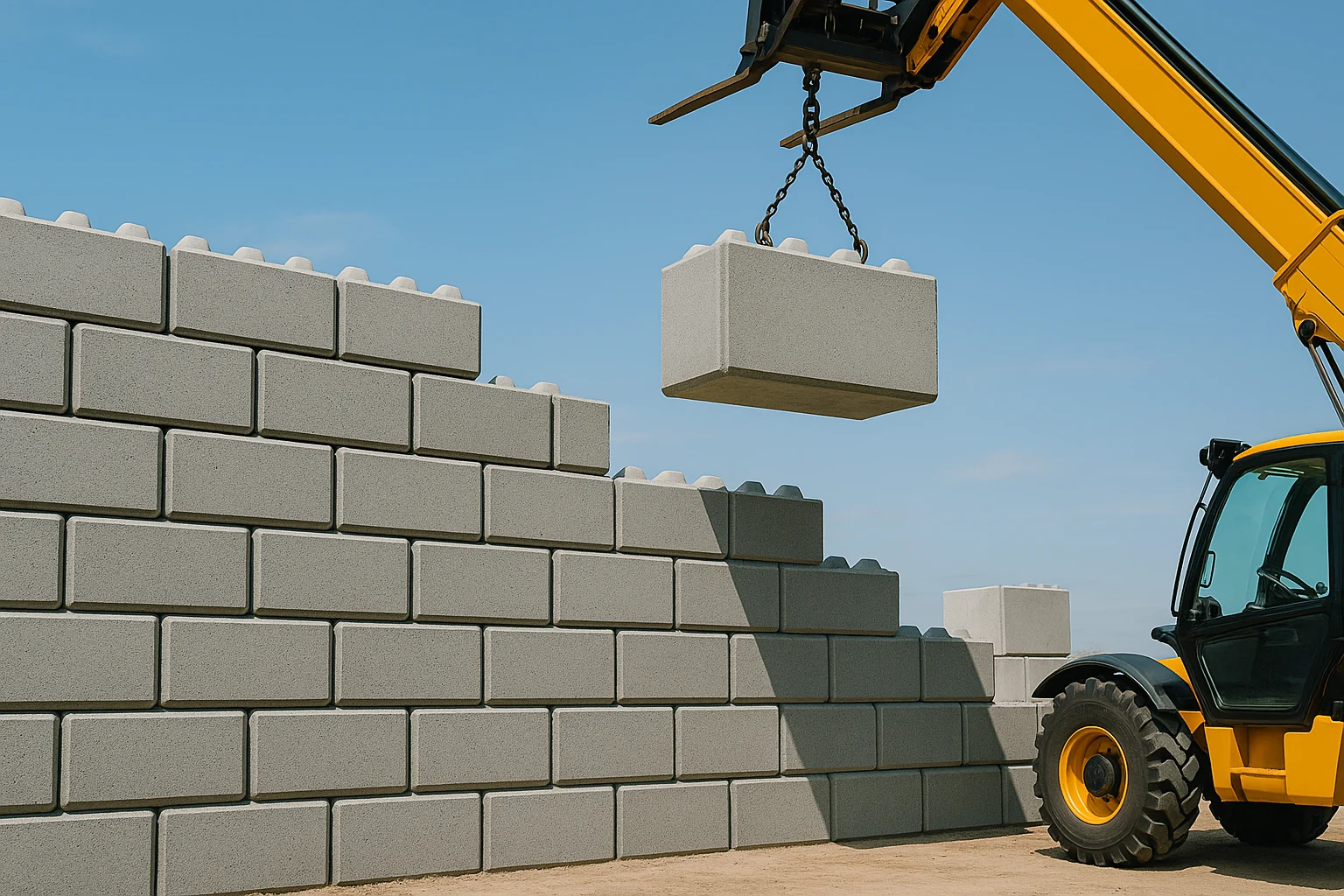
Perhaps most significant is the development of interlocking concrete blocks that eliminate mortar joints entirely. These systems enable faster construction whilst maintaining superior structural integrity — the logical evolution of Palmer’s original vision.
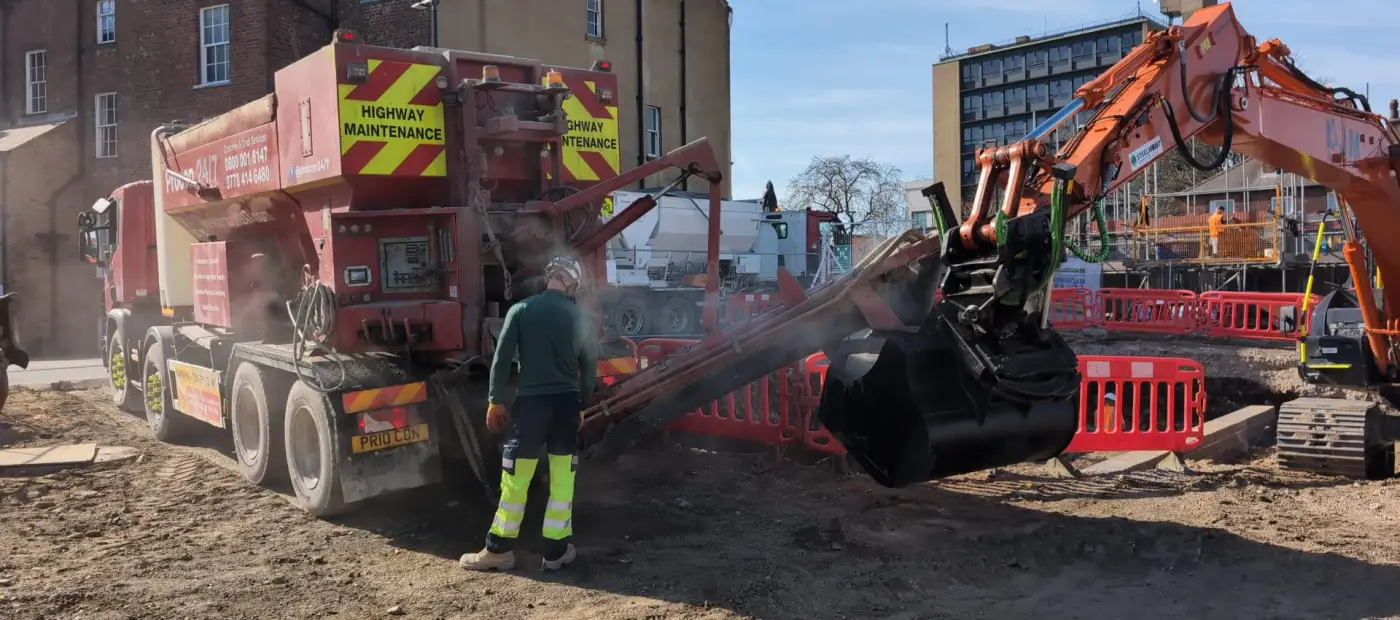
Modern blocks are available in carefully engineered strength grades to suit everything from garden walls to load-bearing commercial structures. And the concrete used to produce them has equally advanced: Procon 24/7’s ready-mix concrete and volumetric concrete services supply precisely specified mixes for block production and construction across Yorkshire and the North West.
What Is the Lasting Legacy of the Concrete Block?
From Joseph Aspdin’s Portland Cement patent to Palmer’s mechanical marvel, from wartime necessity to modern engineering sophistication, the concrete block’s evolution mirrors the broader story of construction industrialisation. What began as a simple idea — making artificial stone in uniform blocks — became a fundamental technology that democratised quality construction.
Today, as the industry faces new challenges around sustainability, energy efficiency, and construction speed, concrete blocks continue adapting. The same innovative spirit that transformed industrial waste into building materials now focuses on lower-carbon production and ever more versatile structural performance.
Frequently Asked Questions About Concrete Block History
Are cinder blocks and concrete blocks the same thing?
Not exactly. Traditional cinder blocks used coal cinders as aggregate, making them lighter but less strong than modern concrete blocks. Today’s blocks typically use stone aggregates and are significantly stronger, though the terms are often used interchangeably in everyday speech.
Why were breeze blocks so popular in post-war Britain?
Breeze blocks used furnace clinker (industrial waste), making them incredibly affordable during post-war material shortages. Their lighter weight reduced transportation costs and enabled faster construction — crucial for urgent rebuilding efforts across British cities.
When did concrete blocks replace traditional stone masonry?
The transition occurred gradually from 1900 to 1950. Palmer’s 1900 patent enabled mass production, but concrete blocks truly dominated during the inter-war construction boom and post-war reconstruction when speed and economy became paramount.
How strong are modern concrete blocks compared to historical ones?
Modern concrete blocks are substantially stronger due to improved cement formulations, better aggregates, and precise manufacturing. Today’s high-strength blocks can exceed 20 MPa compressive strength, compared to early blocks that often achieved less than 10 MPa.