Fibre reinforcement and steel mesh both control cracking and add reinforcement to a concrete slab, but they work differently and suit different situations. This guide compares them directly so you can judge which fits your project, rather than defaulting to whichever a contractor happens to prefer.
For the full picture across every reinforcement method, see our complete guide to concrete reinforcement types.
How Steel Mesh Works
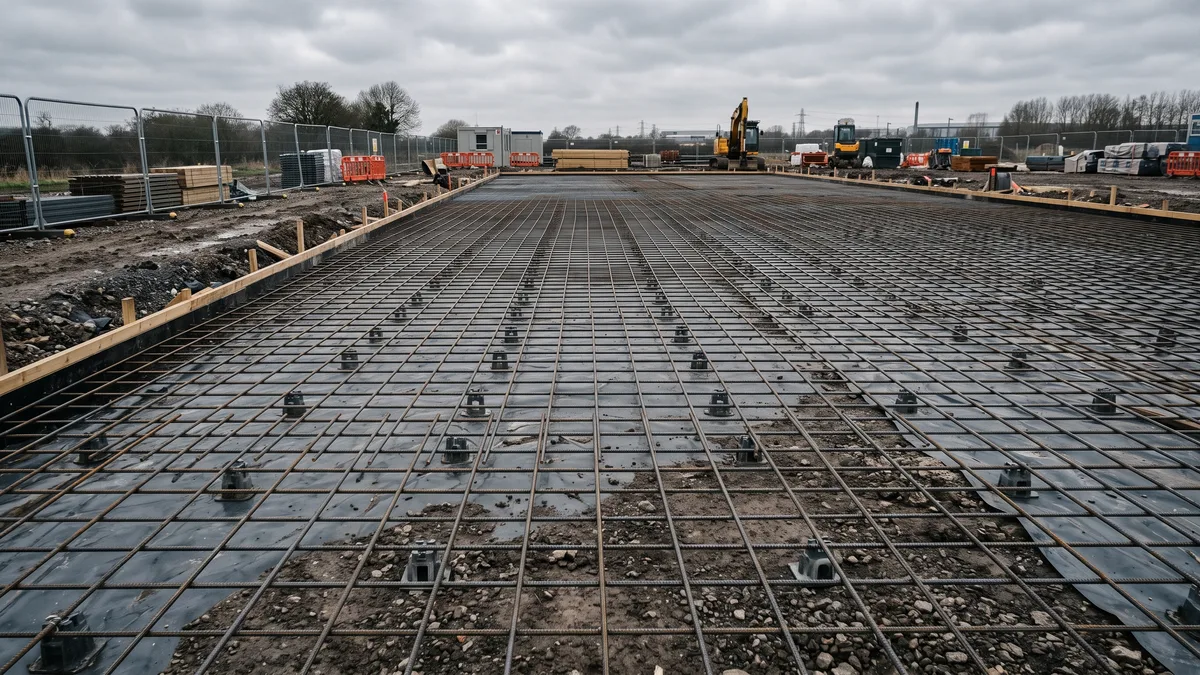
Steel mesh, typically A142 for domestic driveways or A252/A393 for commercial floors, is a welded grid of steel bars laid at a specified depth within the slab, usually the lower third, before the pour. It provides reinforcement at a known, engineered position and spacing.
The trade-off: mesh must be cut to size, positioned correctly, and chaired to hold it at the right depth during the pour. Incorrect placement, mesh pushed to the wrong depth or left sitting on the subgrade, is a common and avoidable cause of ineffective reinforcement.
How Fibre Reinforcement Works
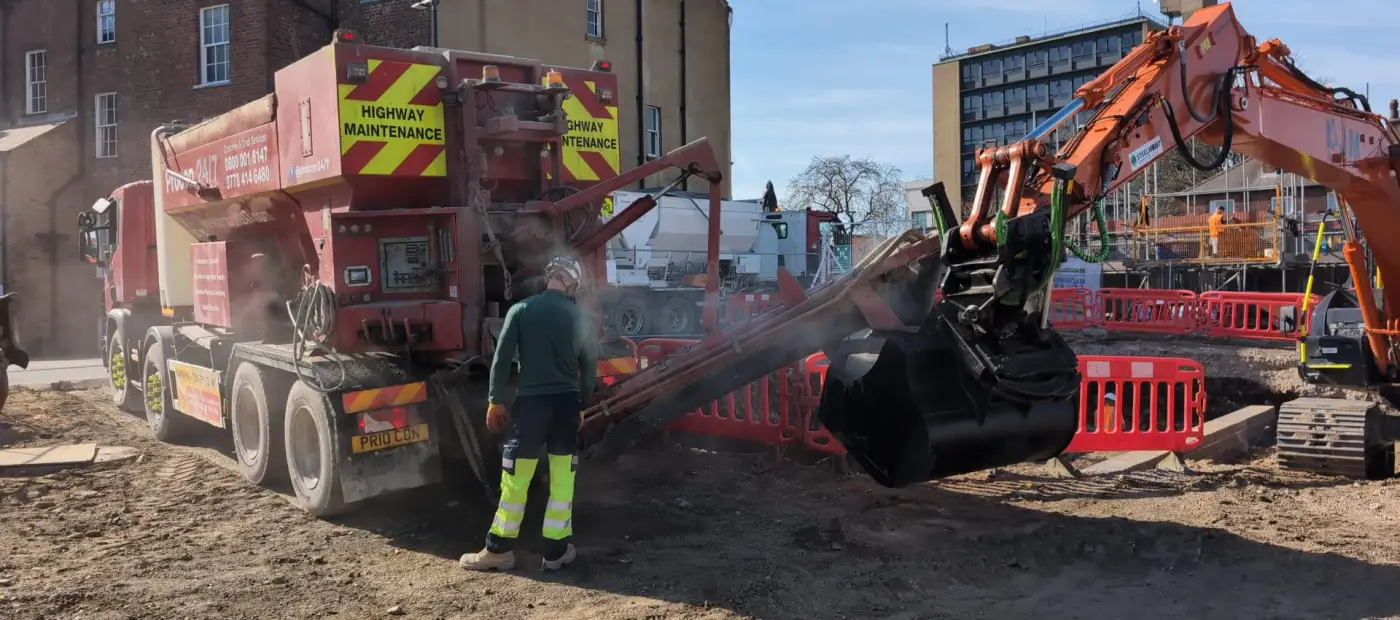
Fibres, whether polypropylene or steel, are mixed directly through the concrete at the point of batching, distributing reinforcement through the full depth and volume of the slab rather than at a single specified plane. There is no mesh to cut, position, or chair on-site.
The trade-off: fibre dosage and type must be correctly engineered for the application. See our fibre dosage guide for how this varies by fibre type, and our steel vs polypropylene comparison for choosing between fibre types.
Fibre vs Mesh: Direct Comparison
| Steel mesh | Fibre reinforcement | |
|---|---|---|
| Placement | Cut, positioned and chaired on-site | Mixed in at batching, no on-site placement |
| Placement risk | Can be pushed to wrong depth during pour | Distributed through the full mix by design |
| Labour | Additional cutting/fixing labour | No mesh-fixing labour required |
| Best for | Specified structural designs, some large commercial slabs | Driveways, patios, and slabs where mesh logistics are difficult |
Frequently Asked Questions
Is fibre reinforcement as strong as steel mesh?
It can be, when correctly engineered for the application. Fibre-reinforced concrete is commonly used to replace mesh in ground-supported industrial and commercial slabs, but the fibre dosage and type must be engineered for equivalence, confirmed by a structural engineer, not assumed.
Why would someone still choose mesh over fibre?
Some structural specifications call for mesh explicitly, particularly where a specific bar diameter and spacing is required by the design rather than a distributed reinforcement solution. Large-scale commercial slabs sometimes find mesh more cost-competitive per m² than an engineered fibre dose at scale.
Does mesh placement carry any risk that fibre avoids?
Yes. Mesh must be positioned at the correct depth in the slab, usually the lower third, and can be pushed out of position during the pour if not properly chaired. Fibre reinforcement is distributed through the full depth of the mix at the point of batching, removing this placement risk entirely.
Can Procon 24/7 advise which is right for my project?
Yes. Speak to our team about your application, whether a driveway, industrial floor, or structural slab, and we can advise on fibre or mesh alongside the correct concrete grade for the job.
Talk to Procon 24/7 About Reinforcement
Whether fibre or mesh suits your project, Procon 24/7 supplies the right concrete grade and fibre-reinforced concrete across Yorkshire and the North West. Speak to our team before you order.