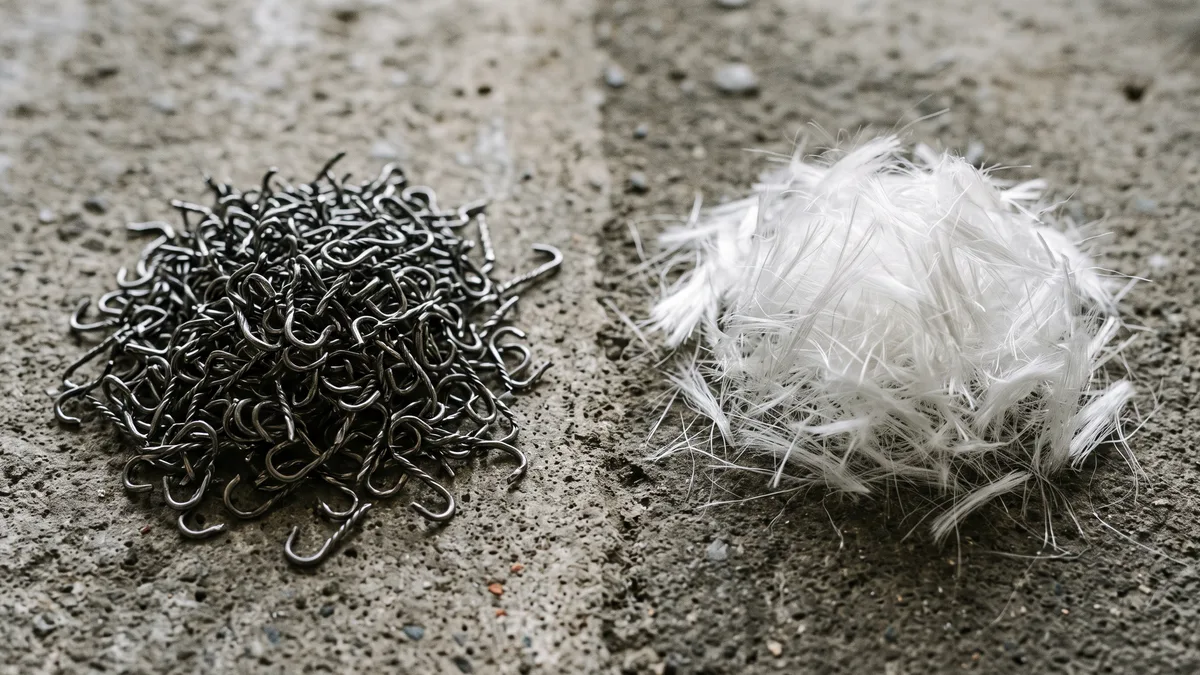
Steel and polypropylene are the two main fibre types used in UK concrete, and they solve different problems. Steel fibres add genuine structural load-bearing capacity. Polypropylene fibres primarily control early plastic-shrinkage cracking. Choosing the wrong one for the application either overpays for performance you do not need, or under-reinforces a slab that needed structural fibres.
For the practical mixing process, see our guide on how to add fibres to concrete.
Steel Fibre Reinforced Concrete
Steel fibres, typically hooked or crimped short lengths of steel wire mixed through the concrete, provide genuine post-crack load transfer and structural capacity. They are engineered and dosed for the specific load requirement of the slab, in the same way a mesh or rebar specification would be.
Best for: industrial floors, warehouse and ground-bearing slabs under forklift or racking loads, and other applications where fibre reinforcement is replacing structural mesh. See our reinforcement types guide for how commercial floor loading determines mesh or fibre specification.
Polypropylene Fibre Reinforced Concrete
Polypropylene micro-fibres are fine synthetic filaments mixed through the concrete at a relatively low dosage, primarily to control plastic-shrinkage cracking in the first hours after placement, before the concrete has developed significant strength. Structural macro-synthetic fibres, a coarser and more heavily dosed polypropylene product, can provide load-bearing performance closer to steel fibre in some applications.
Best for: driveways, patios, and domestic slabs where shrinkage crack control is the priority, and applications where corrosion resistance or non-metallic reinforcement matters (exposed architectural finishes, or areas where steel fibre surface staining is undesirable).
Which Should You Choose?
| Steel fibre | Polypropylene fibre | |
|---|---|---|
| Primary role | Structural load-bearing capacity | Shrinkage crack control |
| Best for | Industrial floors, structural slabs | Driveways, patios, domestic slabs |
| Corrosion | Possible minor surface staining | Does not corrode |
| Relative cost | Higher | Lower |
Frequently Asked Questions
Can steel and polypropylene fibres be used together?
Yes, in some specifications. Combining a low dose of polypropylene micro-fibres (for early plastic-shrinkage crack control) with structural steel or macro-synthetic fibres (for load-bearing performance) is used on some industrial floor specifications. Confirm with a structural engineer rather than combining doses without design input.
Do steel fibres rust and cause staining?
Fibres at or very near the surface can occasionally show minor surface rust spotting, particularly before the concrete has fully cured. This is generally cosmetic rather than structural, and proper cover and finishing technique minimise it. Polypropylene fibres do not corrode, which is one reason they are preferred for exposed architectural finishes.
Are polypropylene fibres a full substitute for structural reinforcement?
No, not on their own. Standard polypropylene micro-fibres control early plastic-shrinkage cracking but do not provide meaningful load-bearing capacity. Structural macro-synthetic or steel fibres, engineered and dosed for the application, are what replace mesh or rebar in load-bearing applications.
Which is cheaper, steel or polypropylene fibre reinforcement?
Polypropylene micro-fibres are generally the lower-cost option per m³, since dosage rates are lower and the material itself is cheaper. Steel fibres cost more due to both material and the higher dosage rates typically required for structural performance, but the choice should be driven by the application's structural requirement, not price alone.
Get the Right Fibre Specification
Procon 24/7's fibre-reinforced concrete service supplies both steel and polypropylene fibre mixes, dosed on-site, across Yorkshire and the North West. Speak to our team about the right type and dosage for your slab.