The honest answer is that poured concrete is normally cheaper, and the gap widens as the area grows. But cost per square metre is not the only thing that decides it, and there are jobs where slabs are clearly the better buy.
Where the Cost Difference Actually Comes From
Both options need the same foundation. Both need the ground dug out and at least 100mm of well compacted hardcore. That part of the job costs roughly the same either way, and skimping on it is the usual reason either surface fails.
The difference is what happens on top:
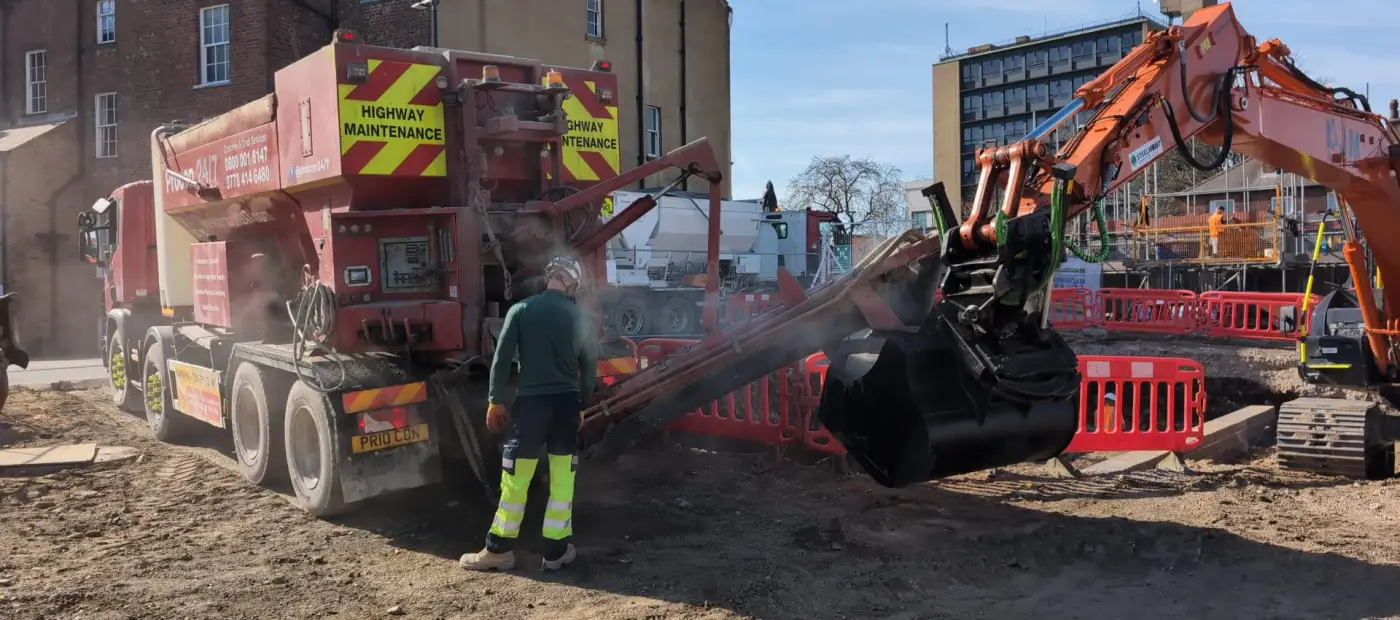
- Poured concrete arrives as one delivery and is placed, levelled and floated in a single operation. At 2025 rates C20 runs roughly 90 to 120 pounds per cubic metre, which is about 9 to 12 pounds per square metre of material at 100mm thick. The labour is concentrated into one intense session rather than spread across days.
- Paving slabs carry a higher material cost per square metre for anything beyond basic utility paving, plus a mortar or sharp sand laying course, plus jointing material. Then every single unit is placed, levelled, tapped down and checked by hand. That labour is the real cost, and it scales directly with area.
On a small patio the difference can be modest. On a driveway or a large base, the per-unit labour of paving compounds until concrete is clearly cheaper installed.
When Concrete Is the Better Buy
- Large areas. The bigger the pour, the better the economics, because the labour does not scale the way unit laying does.
- Anything structural. Shed bases, garage floors, workshop floors and foundations want a monolithic slab, not units sitting side by side.
- Heavy or repeated loading. Vehicles, plant and storage all favour a continuous reinforced slab.
- Where the surface is hidden. Under a building or a shed, appearance earns nothing, so paying a premium for it makes no sense.
When Slabs Are Worth the Extra
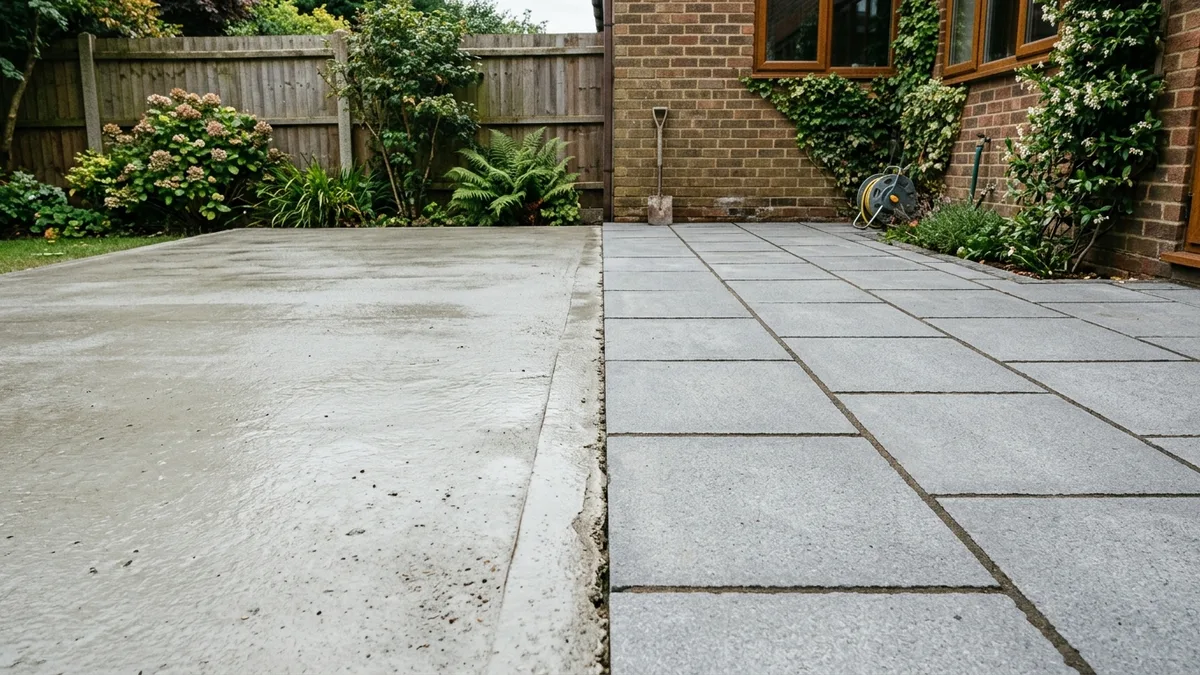
- Appearance matters. A patio you sit on every summer is a different decision from a shed base. Paving offers finishes poured concrete does not, though a finished concrete surface narrows that gap more than people expect.
- Access is genuinely bad. Slabs can be carried through a house or down a narrow passage. Concrete needs the wagon close enough to discharge, or a pump. That said, a line pump reaches most back gardens, so poor access rules concrete out less often than people assume.
- You may need to lift it later. Where services run underneath, being able to take up a few slabs and relay them beats breaking out a concrete bay.
- Very small areas. For a couple of square metres, a handful of slabs avoids the whole business of formwork and finishing.
For a front driveway, the surfacing choice also interacts with drainage rules: see planning permission for a concrete driveway.
The Repairability Trade
This is the trade that matters most over a twenty year view. A correctly specified, correctly jointed concrete slab has no individual units to shift, so it generally lasts longer with less attention. Paving is more likely to move, but far easier to put right when it does, because you lift the affected units rather than breaking out and re-pouring.
Concrete failures are usually preventable rather than inevitable. Most come down to a poor sub-base, no movement joints, or the wrong grade for the exposure. Our guide on why concrete driveways crack after winter covers the common causes.
The Middle Option
Laying decorative paving over a poured concrete base gives you the look of slabs on the stability of a monolithic base. It costs more than either on its own, so it makes sense mainly where an existing sound concrete base is being reused, or where a patio has to look right but sits on ground that will not stay still under unbound paving.
If concrete is the direction, work out the volume with our concrete calculator, then see the slab cost guide for size-by-size figures. There is no full-load minimum on volumetric supply, so a small patio pour is a normal booking rather than an expensive one.