You can place concrete in cold weather if the mix, site and protection plan suit the conditions. The main risk is that fresh concrete may freeze before it gains enough strength. Cold conditions also slow strength gain, as noted by The Concrete Centre. Project requirements vary, so ask the engineer or supplier for advice on structural or time-critical work.
What to check before a cold-weather pour
Look at the forecast and the conditions on site. Check the base, formwork, access and the planned cover or enclosure. Do not place concrete on frozen ground. Clear snow, ice and standing water from the area. Then confirm that the mix and protection plan meet the job specification.
Cold concrete can take longer to gain strength. As a result, do not remove covers or formwork just because a set number of hours has passed. Follow the project plan and any strength checks required.
Cold-weather risks and actions
| Risk | What it does | What to do on site |
|---|---|---|
| Fresh concrete freezes | Can damage the concrete before it gains adequate early strength | Protect it from freezing and follow the specified monitoring plan |
| Frozen base or formwork | Can chill the concrete and undermine suitable placement conditions | Do not pour onto frozen surfaces; prepare them as the project requires |
| Slow strength gain | Can delay finishing, loading or formwork removal | Allow for slower progress and use required strength checks |
| Snow, ice or water | Can contaminate the work area or add uncontrolled water | Clear and prepare the area before delivery and placement |
| Sudden loss of protection | Can expose concrete to damaging temperature changes | Maintain protection for the period set by the specification |
A useful distinction: air temperature is not the whole picture
Two pours on the same day can face different risks. One may sit in an open, windy spot. The other may be sheltered. The base and the mix also affect the conditions. So, use the forecast as a warning, not as the only test. Check the work area, the concrete plan and the protection you can keep in place.
This is why a ready-mix order should include a clear discussion of the job and timing. The site team can then prepare the area and agree what happens if conditions change. That is more useful than relying on a single temperature figure.
How to protect fresh concrete
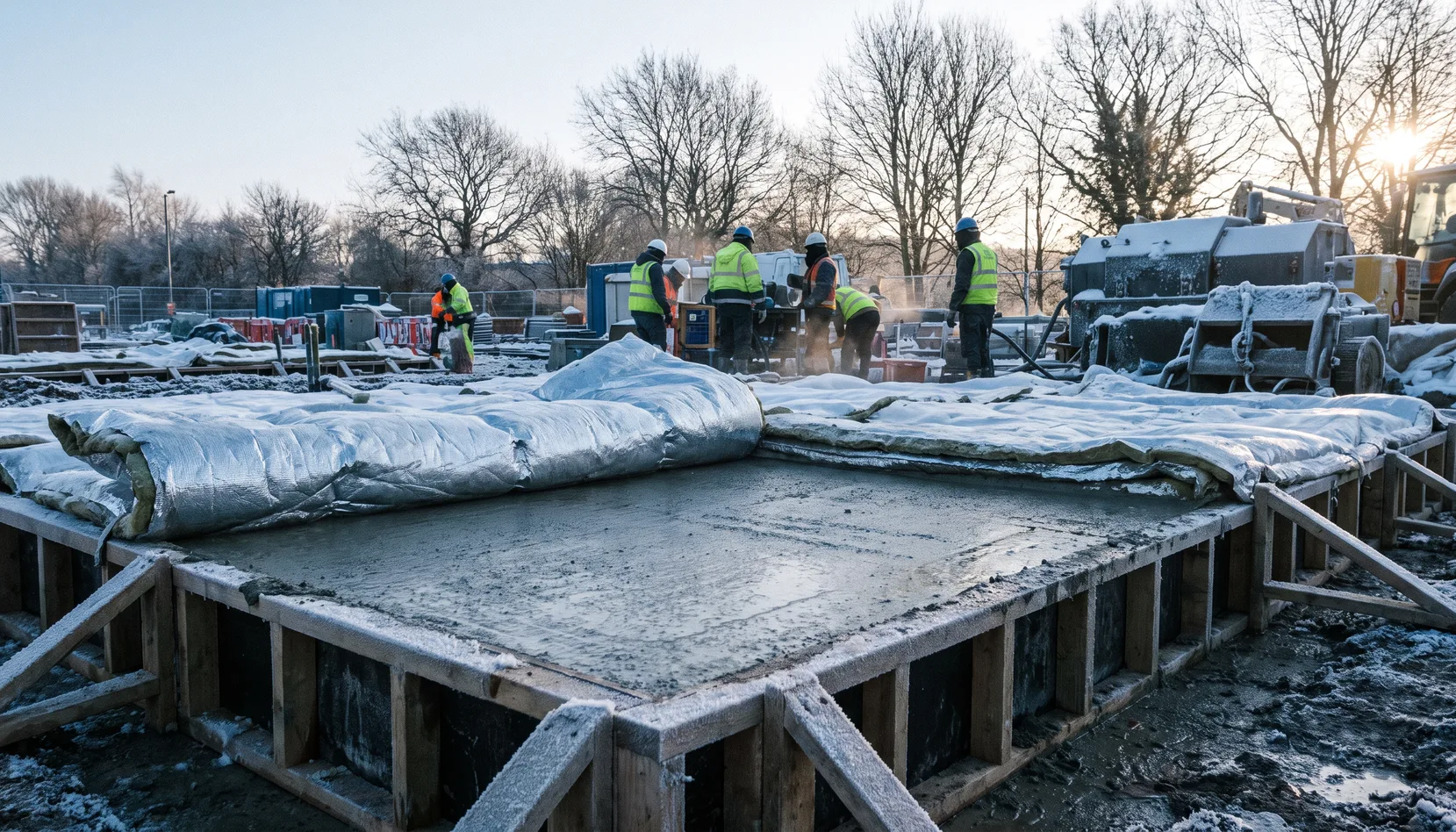
First, prepare the site before the delivery arrives. Have suitable insulating covers or an enclosure ready when the project plan calls for them. Then keep protection in place for as long as required. Also monitor conditions and follow the inspection and strength-testing plan. For example, if the forecast changes before the pour, tell the supplier and site lead. They can review the plan before the concrete is placed. If the weather turns after placement, keep to the agreed protection and monitoring steps. Do not make an unapproved change to the mix.
Do not rely on a general temperature rule for every job. The right approach depends on the concrete, the weather, the element and the project requirements. For structural work, follow the engineer's specification. If the forecast or site conditions change, pause and agree the next step with the responsible people.
What to avoid
- Do not place concrete on frozen ground.
- Do not pour into active snow or onto ice, snow or standing water.
- Do not change the mix or add water without approval.
- Do not remove protection or formwork based only on elapsed time.
- Do not expose the concrete to a sudden temperature change when protection is removed.
These steps reduce avoidable risk, but they do not replace the project's method statement, specification or technical advice. For general information about concrete selection, see our guide to choosing the right concrete. For seasonal surface damage, read about why concrete driveways can crack after winter.
What we see on site
For a ready-mix delivery, agree the pour time with the supplier. Make sure the crew and site are ready before dispatch. In cold weather, delays can change the conditions around the pour. So tell the driver about access and the discharge point when they arrive. If the weather or site has changed, pause. Speak with the supplier or site lead before you proceed. Have the covers ready before the concrete arrives. That way, the team can act at the right time, not after the concrete is down.
Procon supplies ready-mix concrete in West Yorkshire. Contact the team to discuss delivery timing and the mix required for your project.
Frequently asked questions
Can you pour concrete in cold weather?
It may be possible when the mix, base, weather and protection plan suit the work. Follow the project specification and seek technical advice where needed.
Can concrete be placed on frozen ground?
No. Prepare the base in line with the project requirements before placing concrete.
How long should concrete be protected?
Follow the protection period and strength checks in the project specification. Cold weather can slow strength gain, so do not rely on a fixed number of hours.
Can I pour while it is snowing?
Do not pour into active snowfall or onto snow and ice. Clear and prepare the work area, then check conditions with the responsible site representative.