Whilst we commonly talk about concrete "drying," what's actually happening is a chemical reaction called hydration: more like baking a cake than leaving a puddle to evaporate. This distinction between drying and curing determines not just timing, but the ultimate strength and durability of your project. Setting, the initial stiffening that happens before curing begins, is a separate milestone worth understanding first: see how long concrete takes to set.
Quick Answer: Concrete Curing Times at a Glance
- 24–48 hours: Walk-on time: surface hard enough for careful foot traffic
- 7 days: Light vehicle use: approximately 70% of design strength
- 28 days: Full strength benchmark: industry standard for engineering specifications
These timelines represent typical UK conditions. The real story is why they vary, and how to manage that on site.
Does Concrete Dry or Cure: and Why Does It Matter?
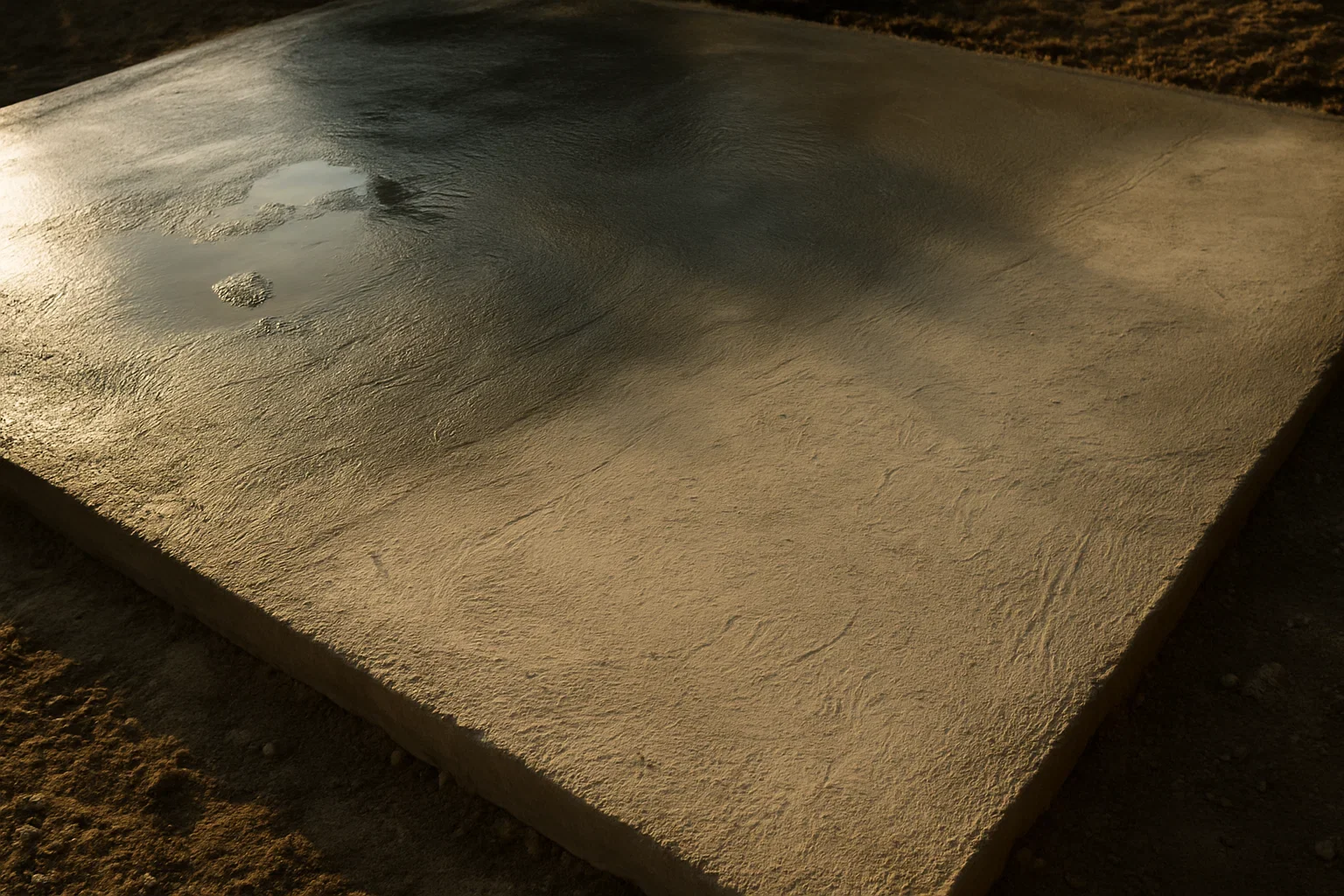
The fundamental misconception about concrete "drying" prevents many people from achieving optimal results. Concrete strength develops through hydration: a chemical reaction where water molecules bond permanently with cement particles to form the crystalline matrix that gives concrete its strength.
This process requires water rather than its absence. Concrete that dries out too quickly produces a weaker, more porous product prone to cracking and premature failure. Professional contractors spray fresh concrete with water or cover it with plastic sheeting to maintain optimal moisture levels during curing.
This is why professionally batched ready-mix concrete with a controlled water-to-cement ratio outperforms site-mixed alternatives; the chemistry is engineered from the start.
What Factors Affect How Long Concrete Takes to Dry?
Temperature
Concrete needs the right temperature for optimal curing. Hot weather speeds chemical reactions, potentially reducing cure times, but rapid curing risks moisture loss that weakens the final product. Our post on concrete in hot weather covers the specific precautions needed.
Cold weather dramatically slows hydration. Below 5°C, curing nearly stops, risking incomplete strength development and freeze damage. Pouring concrete in cold weather demands protective measures and often extends timelines significantly.
Mix Design and Admixtures
Modern concrete can incorporate admixtures that deliberately modify curing characteristics. Accelerators speed hydration for winter projects or time-critical pours. Retarders slow it for complex placements in hot weather. The water-to-cement ratio is the single most critical factor affecting both curing time and final strength.
For infrastructure work where concrete must reach working strength within a fixed window, standard accelerators are not enough. Procon’s URS (Ultra Rapid Set) technology delivers working strength in two hours, making it practical for night pours under possession (rail T-3 and T-12 slots, and motorway lane closures) where the carriageway or track must reopen before the morning peak. URS 420 and URS 450 are Procon's two grades of this purpose-designed mix, mostly used for airport and highway infrastructure rather than classified against standard C-grades.
Environmental Moisture and Plastic Shrinkage
Counterintuitively, maintaining surface moisture accelerates proper curing. Professional techniques include covering fresh concrete with plastic sheeting to retain moisture, spraying during early curing phases, and applying a curing compound immediately after finishing. Curing compounds form a thin film over the surface that locks in moisture without the need for continuous wetting; they are widely used on large slabs and highway works where ongoing wet curing is impractical.
If surface moisture evaporates faster than bleed water can rise to replace it (common in hot or windy conditions), plastic shrinkage cracks form before the concrete has developed sufficient strength to resist them. Applying an evaporation retardant spray after initial screeding prevents this.
How Do Curing Times Differ by Project Type?
Driveways and pathways: Light foot traffic at 24 hours. Vehicle traffic: minimum 7 days.
Patios and slabs: Light use at 24–48 hours. Heavy furniture or loads: 7 days.
Foundations and footings: Formwork removal: 48–72 hours. Full structural loading: 7 days minimum.
Fence posts: Initial stability: 4–6 hours. Full load-bearing: 24–48 hours.
For domestic concrete projects in Yorkshire and the North West, variable weather during autumn and winter commonly extends these timelines; factor in at least an extra 24–48 hours for pours in October through March.
How Do You Manage Concrete Curing on Site?
Use the right admixtures: Procon 24/7 supplies concrete with accelerators or retarders to suit your project's schedule and conditions. Specify your requirements when ordering.
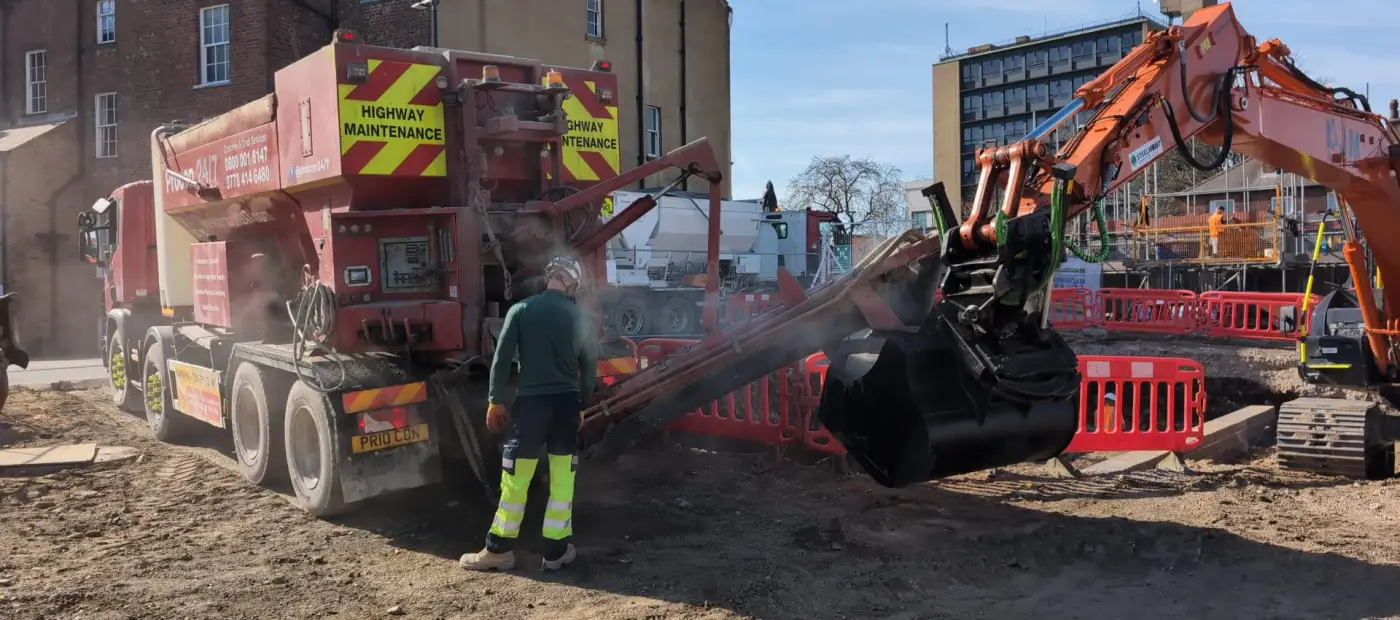
Optimise mix design: Our volumetric concrete service mixes fresh on-site, giving you a full working window from the moment of mixing, with no transit time reducing your pour window.
Plan around weather: Schedule delivery for optimal conditions where possible. We offer flexible same-day delivery across Yorkshire and the North West.
Consider pumping for large pours: For larger pours where access is restricted, our line pump or boom pump ensures concrete reaches exactly where it's needed before the setting window closes.
Frequently Asked Questions About Concrete Drying and Curing
What happens if it rains on fresh concrete?
Light rain after initial set (4–6 hours) rarely harms concrete and may actually aid curing. Heavy rain on fresh concrete can damage the surface; cover with plastic sheeting if rain is forecast before the 24-hour mark.
Can you pour new concrete over old concrete?
Yes, with proper surface preparation. The old surface must be clean, rough enough for bonding, and structurally sound. Bonding agents improve adhesion, though the joint remains a potential weak point.
What happens if I drive on concrete too early?
Driving before adequate strength development causes permanent surface damage, cracking, or structural compromise. Surface hardness doesn't indicate internal strength; always respect curing timelines.
Can I speed up concrete curing safely?
Yes, accelerating admixtures and optimal moisture management can safely reduce curing times. Avoid shortcuts like excessive heat or forced drying that compromise long-term strength. Our team can advise on the right admixture for your conditions.
Does concrete keep getting stronger after 28 days?
Yes. Concrete continues gaining strength for years under proper conditions. The 28-day figure is the industry standard for measuring design strength: the figure used by structural engineers and building regulations.
Is ready-mix or volumetric concrete better for projects with tight timing?
Volumetric concrete is often better for time-sensitive projects; mixed fresh on-site, it gives you a full working window from the moment of mixing. Ready-mix has been in the drum since batching, which slightly reduces your working window before initial set begins.