Getting your foundation wrong is not just costly: it is potentially catastrophic. Whether you are planning a shed base, garden wall, or home extension, the concrete you choose for your footings will determine whether your project stands strong for decades or becomes an expensive nightmare. This guide gives you the straight answer on what concrete is best for footings in the UK, plus everything else you need to get this critical step right.
Why Does the Right Concrete for Your Footings Matter?
Your footings are the foundation of everything that follows. They support the entire weight of your structure, transferring loads safely into the ground below. You would not build a house on sand, and using the wrong concrete mix for your footings is essentially the same mistake.
Substandard concrete can lead to:
- Cracking under load within months of completion
- Sinking or settlement as the foundation fails
- Structural instability that compromises the entire build
- Costly repairs that often require complete reconstruction
The difference between the right and wrong mix can make or break your project.
What Is the Best Concrete Mix for Footings in the UK?
For most standard domestic applications in the UK, including shed bases, garden walls, home extensions, and typical house foundations, the recommended concrete mix is C25 (GEN3).
This provides the ideal balance of strength, workability, and cost-effectiveness for residential projects. Unless specified otherwise by a structural engineer, C25/GEN3 is your go-to choice for footings. It delivers 25 N/mm2 characteristic compressive strength at 28 days, with a water-to-cement ratio typically around 0.55 or below for adequate durability in UK ground conditions.
How Do Concrete Grades Work? Decoding the Numbers
The 'C' numbers refer to compressive strength measured in Newtons per square millimetre (N/mm2) after 28 days of curing:
- C20 (GEN1), 20 N/mm2: Suitable for paths, shed floors, or non-structural elements. Not recommended for structural footings.
- C25 (GEN3), 25 N/mm2: The all-rounder for most house foundations, footings, and domestic structural applications. Standard choice for single and two-storey extensions.
- C30/C35, 30 to 35 N/mm2: Higher strength for commercial concrete projects, reinforced concrete frames, heavy-duty applications, or where specifically required by a structural engineer.
For typical domestic footings, C25 provides more than adequate strength while remaining cost-effective and easy to work with. For larger domestic projects, our domestic concrete service covers exactly these applications.
How Deep Should Footings Be?
Footing depth is as important as concrete grade. UK Building Regulations Part A (Structure) sets minimum depths based on soil type and structural load:
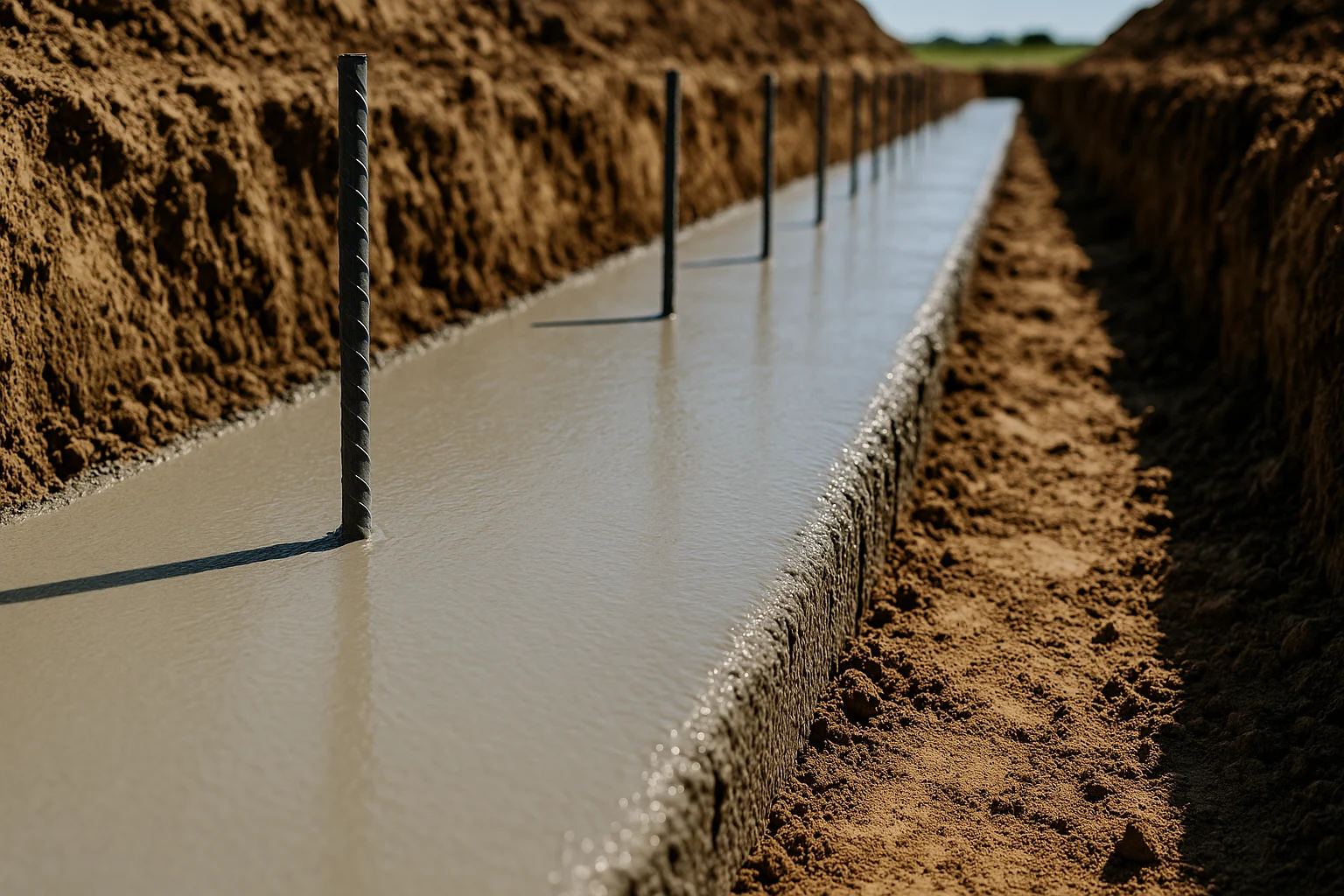
- Single-storey extension: typically 450mm to 600mm depth in stable ground
- Two-storey extension: typically 750mm to 1m in stable ground
- Shrinkable clay soils: minimum 750mm, often 1m or more to clear seasonal movement zones
- Near trees: depth increases further depending on tree species and proximity
Always verify the required depth with Building Control and your structural engineer before excavation begins. The concrete grade does not compensate for insufficient depth.
Should You Use Ready-Mix or Volumetric Concrete for Footings?
You have two main delivery options, each with distinct advantages:
Ready-Mix Concrete
Ready-mix concrete is pre-mixed at the plant and delivered ready-to-pour in standard trucks. Best suited for:
- Projects with clear, unobstructed access
- Situations where you know the exact volume required
- Larger pours where the entire load will be used
Volumetric Concrete (Recommended for Footings)
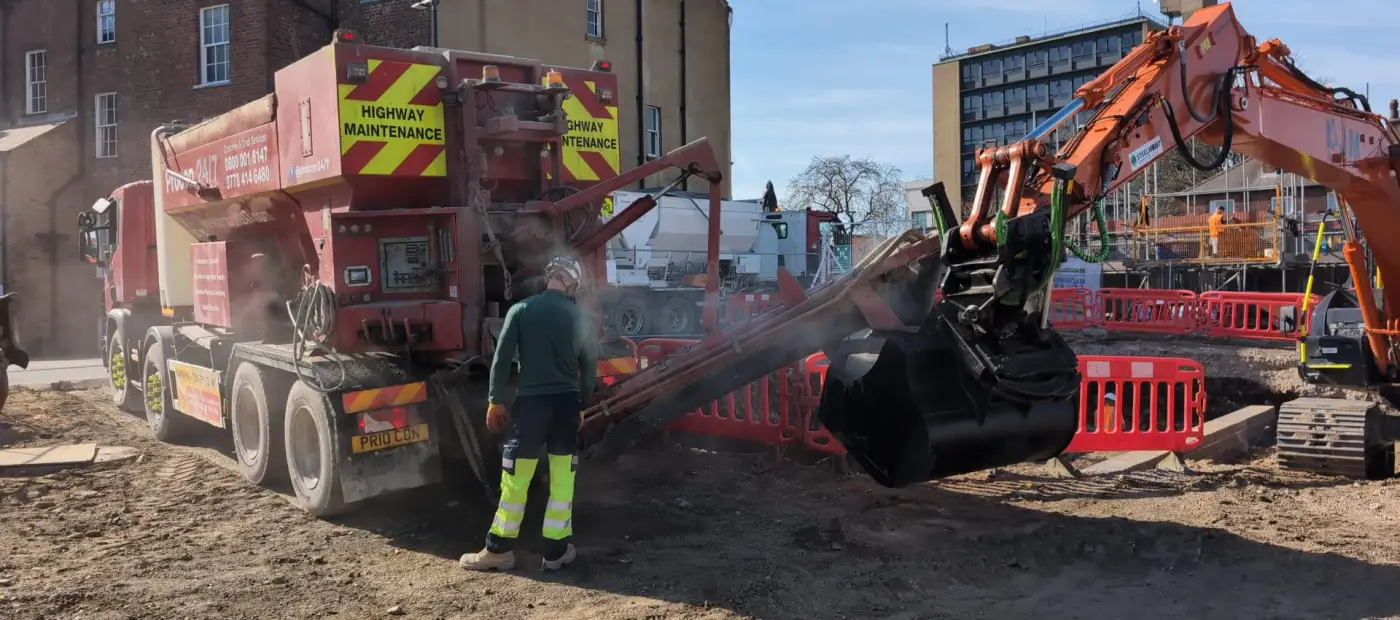
Volumetric concrete is mixed fresh on-site using mobile batching plants. Key advantages for footing work:
- Flexibility: concrete is mixed to order, adjust quantities as needed
- Freshness: mixed immediately before use for optimal workability
- Pay for what you use: perfect if your calculations are slightly off or ground conditions vary
- Extended working time: no rush to place concrete before it starts to set
For DIY projects and domestic footings, volumetric concrete offers the best combination of flexibility and value. It is also ideal when access is tight. If you need concrete reaching difficult spots, our concrete line pump service can deliver it precisely where needed.
Rapid-Set Concrete for Time-Critical Structural Pours
Where the build programme is tight, or where a foundation pour must be completed within a single shift window, standard concrete's 24 to 48-hour early strength gain can cause delays. Procon 24/7's Ultra Rapid Set (URS) concrete reaches structural strength within two hours of placement. URS 420 and URS 450 are Procon's two grades of this purpose-designed mix, specified mainly for infrastructure work such as rail possessions, motorway closures and airside pours, rather than standard domestic or light commercial footings. It remains useful for genuinely time-critical out-of-hours structural work, where a night-shift pour must be load-ready before the next working day begins. URS is a patented cement system, not a standard accelerator admixture.
How to Calculate How Much Concrete You Need for Footings
Getting your volume right saves money and prevents delays. The simple formula:
Length (m) x Width (m) x Depth (m) = Volume in m3
Worked Example
For a strip footing 10m long, 0.6m wide, and 0.45m deep: 10 x 0.6 x 0.45 = 2.7m3
Critical Tips
- Add 5 to 10% extra for uneven ground and wastage
- Measure twice, order once: double-check all dimensions
- Consider access: can the mixer reach your footings directly?
Use our free concrete calculator for accurate volume estimates before you order.
What Are the Most Common Footing Concrete Mistakes to Avoid?
1. Pouring in Extreme Weather
Avoid pouring on frozen ground, during heavy rain, or below 2 degrees C without cold-weather admixtures. Our team can advise on frost protection solutions for winter pours across Yorkshire and the North West.
2. Incorrect Water Content
Adding extra water weakens concrete significantly. Each additional 25mm of slump can reduce strength by up to 5%. Professional delivery ensures exact water ratios, every pour, every time.
3. Poor Compaction
Trapped air reduces strength and durability. Use poker vibrators for deep pours and systematic tamping for shallow footings.
4. Insufficient Depth
Never compromise on footing depth. Follow your building plans exactly: inadequate depth leads to foundation failure.
5. Rushing the Process
Concrete continues gaining strength for 28 days. Do not load footings prematurely, especially in cold weather when curing slows significantly. See our full guide on how long concrete takes to set for the factors that speed up or slow down that window.
6. Ignoring Below-Ground Moisture Protection
Standard concrete blocks and footings are porous by nature: water moves through them by capillary action unless the mix or surface is treated. For basements and other below-ground work, specify a low-permeability mix or a waterproofing admixture at the design stage rather than fixing damp problems after the pour. See our guide on whether concrete blocks are waterproof for which treatment method suits your project.
Frequently Asked Questions: Concrete for Footings
What strength concrete should I use for foundations?
For most UK domestic foundations and footings, C25 (GEN3) provides the ideal strength: 25 N/mm2 compressive strength exceeds typical residential requirements while remaining cost-effective.
Can I mix concrete for footings by hand?
While possible for very small jobs like single fence posts, hand-mixing for any significant footing work is impractical and risky. Professional delivery ensures consistent strength, proper ratios, and quality control impossible to achieve manually.
How long do concrete footings take to cure?
Concrete reaches approximately 70% of its strength within 7 days and full design strength after 28 days. You can typically begin building on footings after 3 to 7 days, depending on weather and load requirements.
Do I need reinforcement in my footings?
This depends on your project and local building regulations. Many domestic footings require steel rebar. Always follow approved building plans and consult Building Control if uncertain. We also supply fibre-reinforced concrete where structural reinforcement is incorporated directly into the mix.
What happens if I use the wrong concrete strength for footings?
Too weak: cracking, settlement, and structural failure. Too strong: costs more money but does not typically cause problems. When in doubt, C25 is the safe choice for domestic work.
Is volumetric concrete better than ready-mix for footings?
For most footing projects, yes: volumetric concrete gives you a fresh mix on-site and you only pay for what you use. This is especially valuable when ground conditions vary or your calculations are not exact.
Get Your Footings Right From the Start
For most domestic footings in the UK, C25 (GEN3) concrete delivered via volumetric mixer provides the correct combination of strength, flexibility, and value.
Key takeaways:
- C25/GEN3 is the standard choice for domestic footings
- Volumetric delivery offers maximum flexibility: only pay for what you use
- Professional mixing ensures consistent quality and strength
- Use our concrete calculator to confirm your volumes before ordering
Whether you are building in Sheffield, Manchester, Leeds, or anywhere across Yorkshire and the North West, our team ensures your project starts on solid ground. Get a free, no-obligation quote.