Selecting the appropriate concrete for your project determines whether you will enjoy decades of trouble-free performance or face costly repairs and premature replacement. Concrete technology has evolved far beyond basic cement, sand, and gravel, offering specialised solutions for virtually every construction application and environmental condition. Getting the specification right from the start is the single most effective quality decision you can make.
What Are the Key Factors for Choosing the Right Concrete?
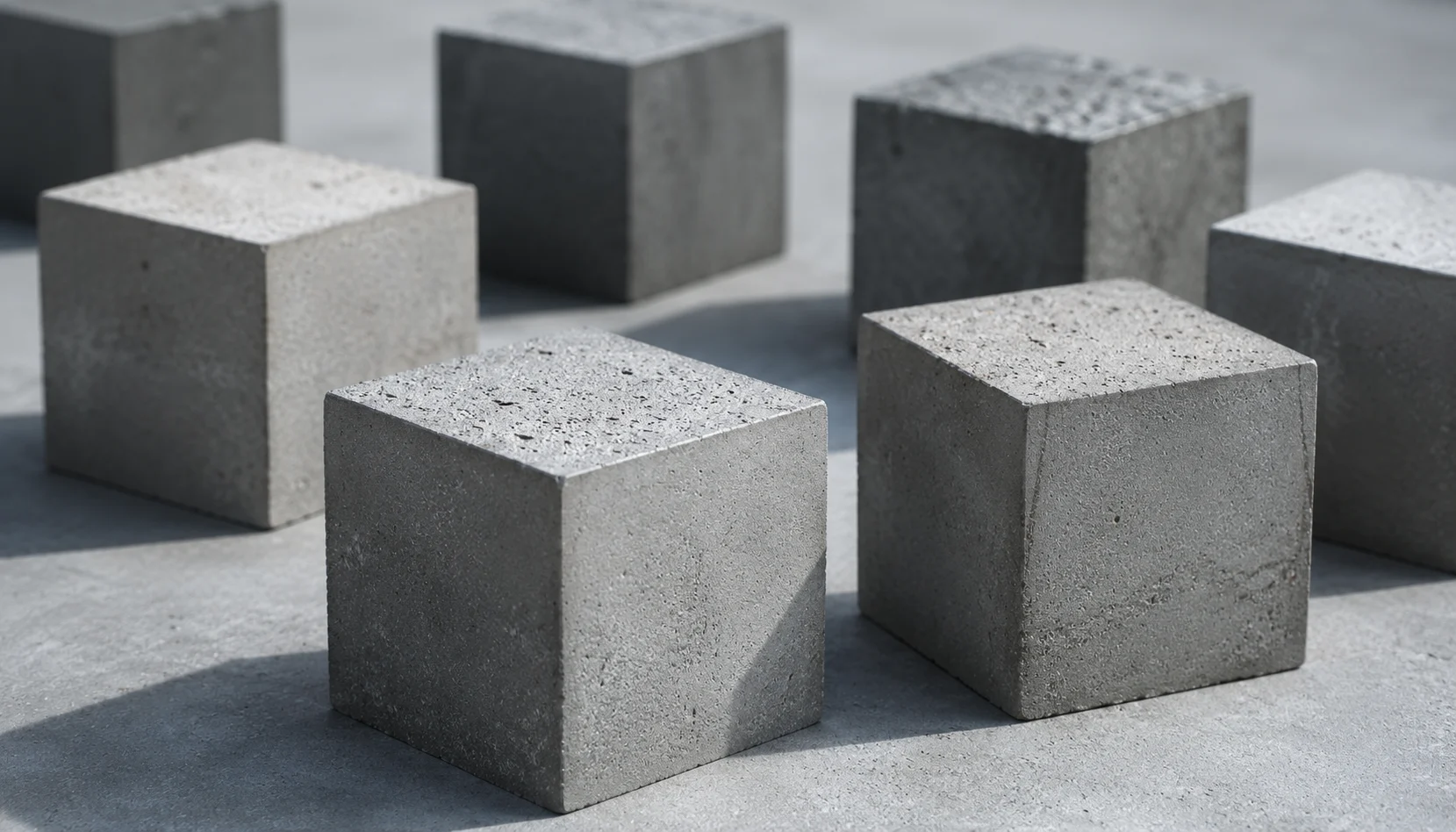
Structural requirements and load: Structural demands form the foundation of concrete selection. Foundations need excellent durability and low permeability, whilst industrial floors require high abrasion resistance. Compressive strength, measured in MPa, represents concrete's ability to resist crushing forces. Residential applications typically need 25 to 30 MPa, commercial projects 32 to 40 MPa, and specialist applications (such as highway carriageway repairs or airside runway pours) may demand 50 MPa or above.
Environmental exposure: Environmental conditions dramatically influence specification. Freeze-thaw cycles require air-entrained concrete that accommodates ice formation without damage, essential for UK driveways and external slabs. Chemical exposure necessitates specialist admixtures. Coastal environments with salt spray need enhanced corrosion protection for embedded reinforcement. UK standards under BS EN 206 and BS 8500 classify exposure conditions from XC (carbonation risk) through XD (de-icing chlorides) to XS (seawater), guiding the appropriate w/c ratio, cement content, and designated mix for long-term durability.
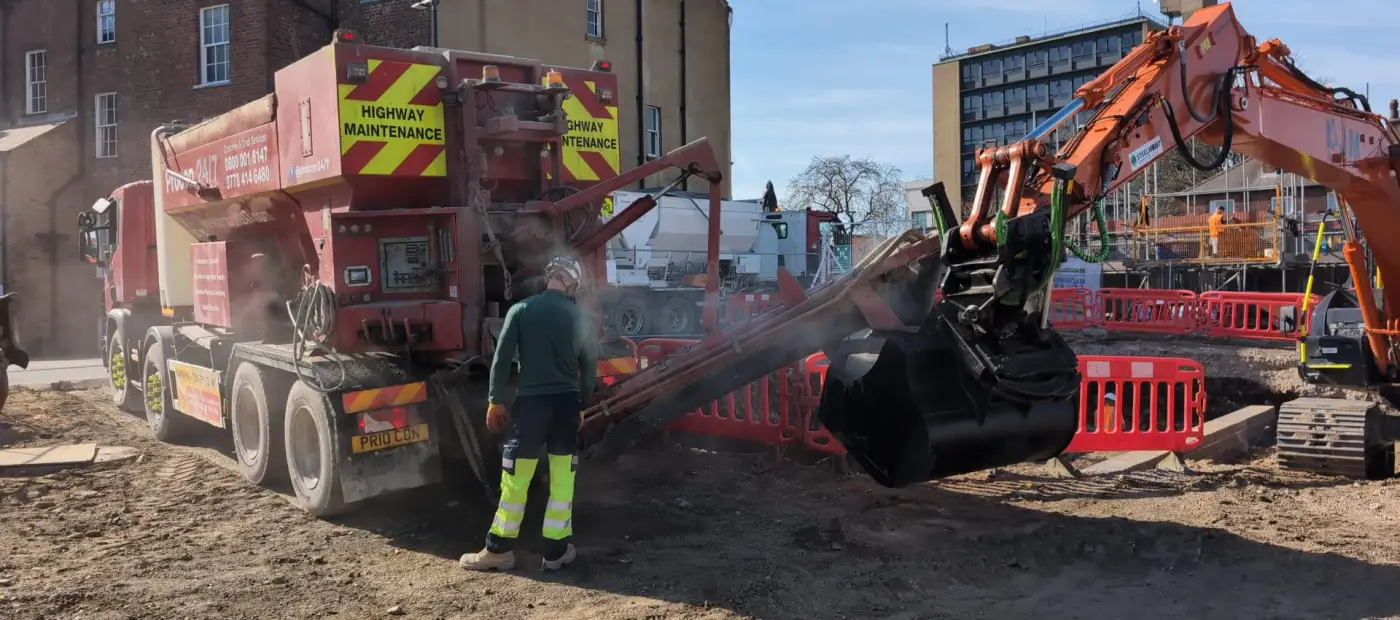
Workability and placement method: A high-slump mix may be needed for difficult access or pump applications; a stiffer mix suits vertical forms. Procon 24/7's volumetric concrete service allows workability and mix design to be adjusted on-site at the point of pour, a significant advantage over fixed-batch ready-mix when conditions change.
Should You Use Ready-Mix or Volumetric Concrete?
Ready-mix concrete provides consistent quality through centralised batching with precise material proportioning. It suits most residential and commercial applications where standard formulations meet project requirements: foundations, slabs, driveways, and general construction.
Volumetric concrete mixes on-site from separate material compartments, allowing real-time adjustments and eliminating concerns about concrete setting during transportation. It excels when projects require multiple concrete specifications, uncertain quantities, or difficult access. You only pay for what you use, eliminating over-ordering waste. Read our detailed comparison in volumetric vs ready-mix concrete.
What Specialist Concrete Technologies Are Available?
Fibre-reinforced concrete: Fibre-reinforced concrete incorporates synthetic or steel fibres that enhance toughness and crack resistance without the complexity of traditional steel reinforcement. Ideal for industrial floors, warehouse slabs, and external hardstandings where mesh placement would add cost and complexity without additional benefit.
Screed: For internal floor finishes, concrete screed provides a smooth, level surface suitable for floor coverings, underfloor heating systems, or polished finishes. Screed sits above the structural slab and is not a structural layer. Procon 24/7 supplies both traditional sand-and-cement screed and liquid flowing screed for larger floor areas where a self-levelling finish is required.
Commercial concrete for floors and slabs: Commercial concrete projects such as warehouse floors, industrial hardstandings, and car park decks require C30 to C40 mixes with engineered reinforcement and precisely controlled surface finishes. Specifying the right grade and reinforcement strategy from the outset prevents costly grinding, joint failure, and surface delamination down the line.
Foamed concrete: Foamed concrete is a lightweight, flowable material ideal for void filling, trench reinstatement, and insulation applications where a structural mix would be over-specified.
How Do You Work Out the Right Quantity and Cost?
Accurate quantity estimation prevents costly shortages or waste disposal expenses. Our concrete calculator helps you estimate requirements accurately for standard shapes. Include a 10% contingency for normal construction tolerances. For complex shapes or mixed specifications, call our team directly.
When evaluating concrete cost, consider the full picture: not just material price, but delivery logistics, placement requirements, finishing complexity, and long-term maintenance. Higher-performance concrete often justifies a modest material premium through reduced placement time, improved finish quality, or extended service life. Read our guide to concrete pouring costs in 2025 for current pricing context.
Frequently Asked Questions About Choosing Concrete
What strength concrete do I need for a driveway?
Residential driveways typically require C25 (25 MPa) concrete with air entrainment for freeze-thaw protection. Consider local climate conditions and expected traffic loads when specifying.
How do I choose between ready-mix and volumetric concrete?
Ready-mix offers proven quality control for standard applications. Volumetric provides flexibility for projects requiring multiple specifications, uncertain quantities, or remote locations. Our team can advise on the best approach for your specific project.
Does higher-strength concrete always last longer?
Not necessarily. Durability depends on permeability, chemical resistance, and proper curing as much as strength. Match concrete specifications to actual exposure conditions rather than simply specifying maximum strength.
What's the most important factor in concrete selection?
Environmental exposure conditions typically prove most critical for long-term performance. Freeze-thaw cycles, chemical exposure, moisture conditions, and temperature variations should all inform your concrete specification, not just structural load.