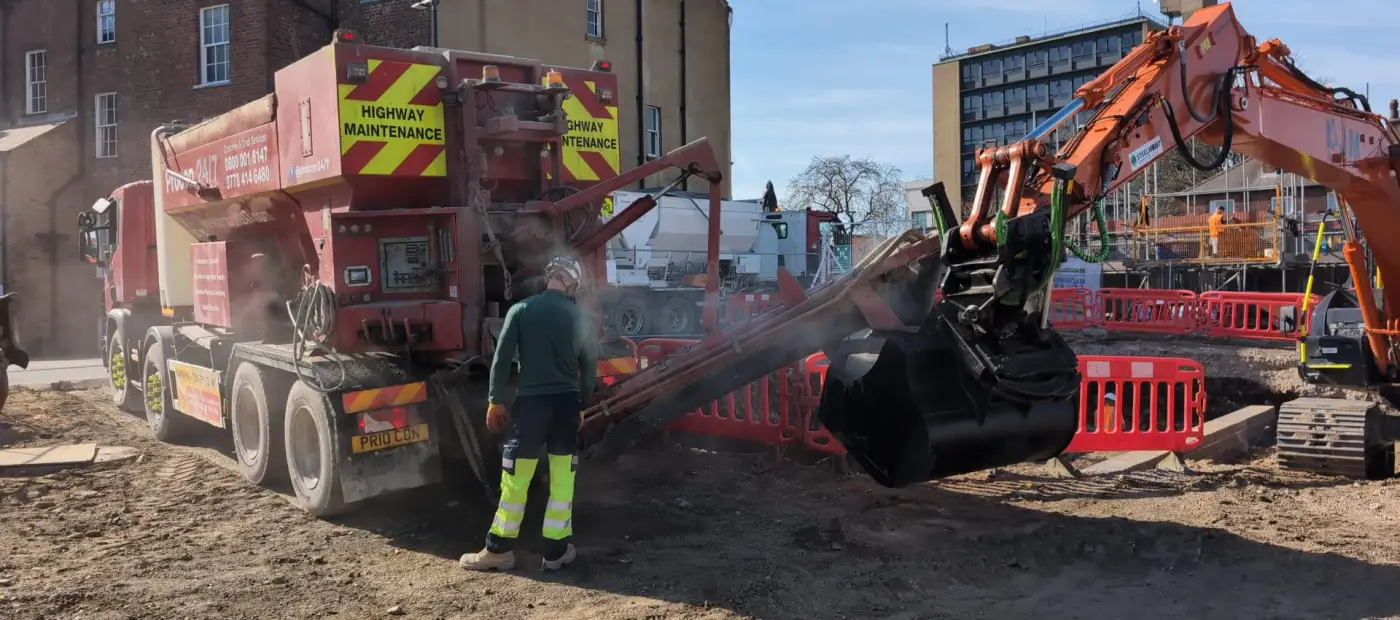
Selecting the right concrete supply method is one of the most important early decisions in any construction project. It affects quality assurance, project scheduling, cost control, and site safety in ways that ripple through every subsequent phase. Getting it right prevents costly delays and ensures structural integrity.
Ready-mix concrete is not suitable for every project, but when specific conditions align, it becomes not just an option but the professional standard. Understanding these indicators empowers contractors, project managers, and serious self-builders to make confident decisions.
When Does Your Project Demand Ready-Mix Concrete?
There are four clear signals that ready-mix is the right choice for your project:
Signal 1: Your Project Requires Certified, Guaranteed Strength
When structural integrity cannot be left to chance, ready-mix provides the quality assurance that professional construction demands. Manufactured in computer-controlled batching plants to precise BS EN 206 and BS 8500 standards, ready-mix eliminates the variability that compromises site-mixed alternatives. Every load arrives with a delivery docket recording mix specification, batch time, and volume, the formal record your building control officer or structural engineer may require.
This becomes the clear choice for structural foundations, commercial concrete flooring, suspended slabs, or any application where specified strength grades represent a critical engineering requirement. When building regulations or professional liability require certified concrete strength, ready-mix provides the documentation that proves compliance.
Our guide to concrete strength grades explains why consistency matters as much as absolute strength values, something only automated batching can guarantee.
Signal 2: You Need to Pour Large Volumes Quickly
Project scheduling often demands rapid concrete placement to maintain critical path timelines. Ready-mix excels at delivering substantial quantities for single, continuous pours that site-mixing cannot match.
This proves essential for large raft foundations, extensive driveways, agricultural yard slabs, or commercial projects where completing pours within specific timeframes is non-negotiable. Multiple drum wagon deliveries can supply concrete faster than any on-site operation whilst maintaining consistent quality throughout.
Bear in mind the 90-minute discharge window under BS EN 206: from the moment water meets cement at the plant, the clock is running. For very large pours requiring multiple loads, coordinate delivery timing carefully to ensure each truck arrives as the previous load is placed, not before.
For sites where direct truck access is restricted, combine ready-mix delivery with our boom pump or line pump to place concrete exactly where it is needed.
Signal 3: Your Planning Is Precise and Your Site Is Ready
Ready-mix rewards meticulous planning: it delivers exactly what was ordered, when scheduled, to professional standards. Choose ready-mix when you have accurately calculated your volume using a concrete calculator, completed formwork to specification, and confirmed clear delivery vehicle access.
This approach demonstrates the thorough planning that characterises successful construction projects whilst eliminating the variables that compromise quality in less controlled environments. If your exact volume is uncertain, or site conditions could change, volumetric concrete carries less risk: you pay only for what you pour.
Signal 4: You Want to Minimise On-Site Disruption and Maximise Safety
Ready-mix delivery eliminates on-site mess, cement bag storage, aggregate stockpiles, and mixing equipment: all safety hazards on busy sites. This suits residential projects where neighbour disruption must be minimised, and commercial sites where organised management takes priority.
Professional suppliers carry appropriate insurance and quality certifications, transferring responsibility for concrete performance from site teams to specialised manufacturers.
Ready-Mix or Volumetric: How Do You Choose?
For projects that do not clearly fit all four signals above (particularly smaller volumes or jobs where exact quantities are uncertain), volumetric concrete often proves more economical. You pay only for what you use, with the mix adjusted on-site as conditions require. There is no minimum order and no part-load surcharge.
Our detailed comparison guide on volumetric vs ready-mix concrete helps identify which approach optimises results for your specific project.
When 24/7 Supply Changes the Calculation
Some projects cannot schedule around supplier business hours. Highway lane closure windows, rail possessions, airside airport pours, and emergency repairs happen at night and on weekends because that is the only time the site is available. For these projects, the supplier's ability to deliver outside normal hours is as important as the concrete specification itself.
Procon 24/7 operates around the clock, including nights and bank holidays. Our out-of-hours concrete service covers Yorkshire and the North West with volumetric and ready-mix supply for time-critical pours. If your programme requires a 2am delivery on a Wednesday, or a bank holiday pour for a highway reinstatement, call us to confirm availability.
Frequently Asked Questions About Choosing Ready-Mix Concrete
What is the typical lead time for ordering ready-mix concrete?
Most suppliers require 24–48 hours' notice for standard orders. Large orders or specialist mixes often need 3–5 days. Procon 24/7 offers same-day delivery across Yorkshire and the North West where scheduling allows. Call to confirm availability.
What access do ready-mix trucks require on site?
Standard ready-mix trucks require 3.5m width clearance, 4m height clearance, and firm ground capable of supporting 32-tonne gross vehicle weight. Delivery chutes extend approximately 3–4 metres. If access is restricted, our boom pump service overcomes most access limitations.
Can ready-mix concrete be modified on-site?
Limited adjustments like small water additions are possible but compromise strength and should be avoided. Any significant modifications require returning to the plant. This emphasises the importance of accurate initial specifications. Use our concrete calculator before ordering.
How do weather conditions affect ready-mix delivery and performance?
Extreme temperatures require adjusted mix designs. Cold weather may need accelerating admixtures; hot weather often requires retarding agents. Procon 24/7 adjusts mix designs for seasonal conditions. Specify your pour date and conditions when ordering.
Is ready-mix concrete suitable for domestic driveways?
Yes, though for most residential driveways, volumetric concrete is the better choice as you only pay for what you use. Ready-mix suits larger domestic projects (20m³+) where quantities are known precisely and access is good.
What is the minimum order for ready-mix concrete and what happens if I need less?
Most ready-mix suppliers set a practical minimum of 3–6m³ per load. Ordering less attracts a short-load surcharge, typically £100–£200. If your project needs under 3m³, our volumetric service is almost always the better choice: no minimum order, no surcharge, and you pay only for what you pour.
What documentation does a ready-mix delivery include?
Every ready-mix load arrives with a delivery docket required under BS EN 206. This records the mix specification, batch time, volume, water additions, and the plant's declaration of conformity. Keep the docket: it is your evidence of what was supplied for building control and structural engineer sign-off.
When should I consider out-of-hours concrete supply for a construction project?
Night and weekend supply becomes necessary when the pour cannot happen during normal working hours: highway lane closure windows, rail possessions, airside airport work, or projects with tight programme constraints. Procon 24/7 operates around the clock. See our out-of-hours concrete service for details.