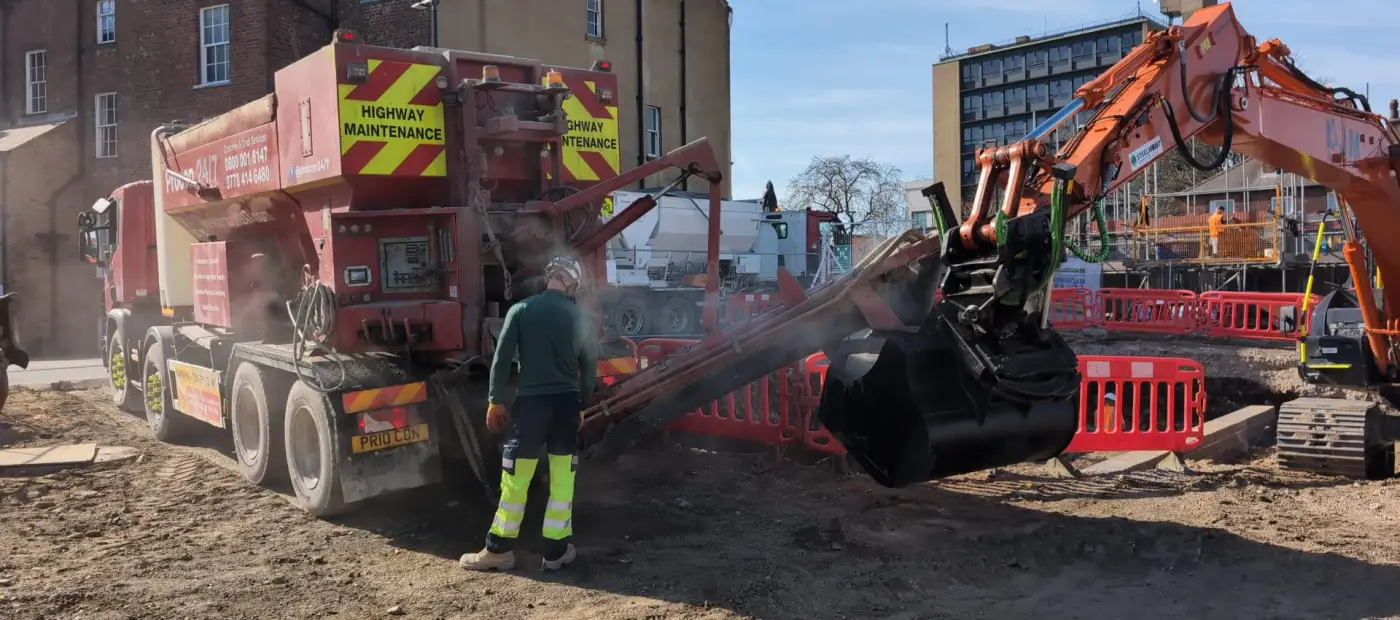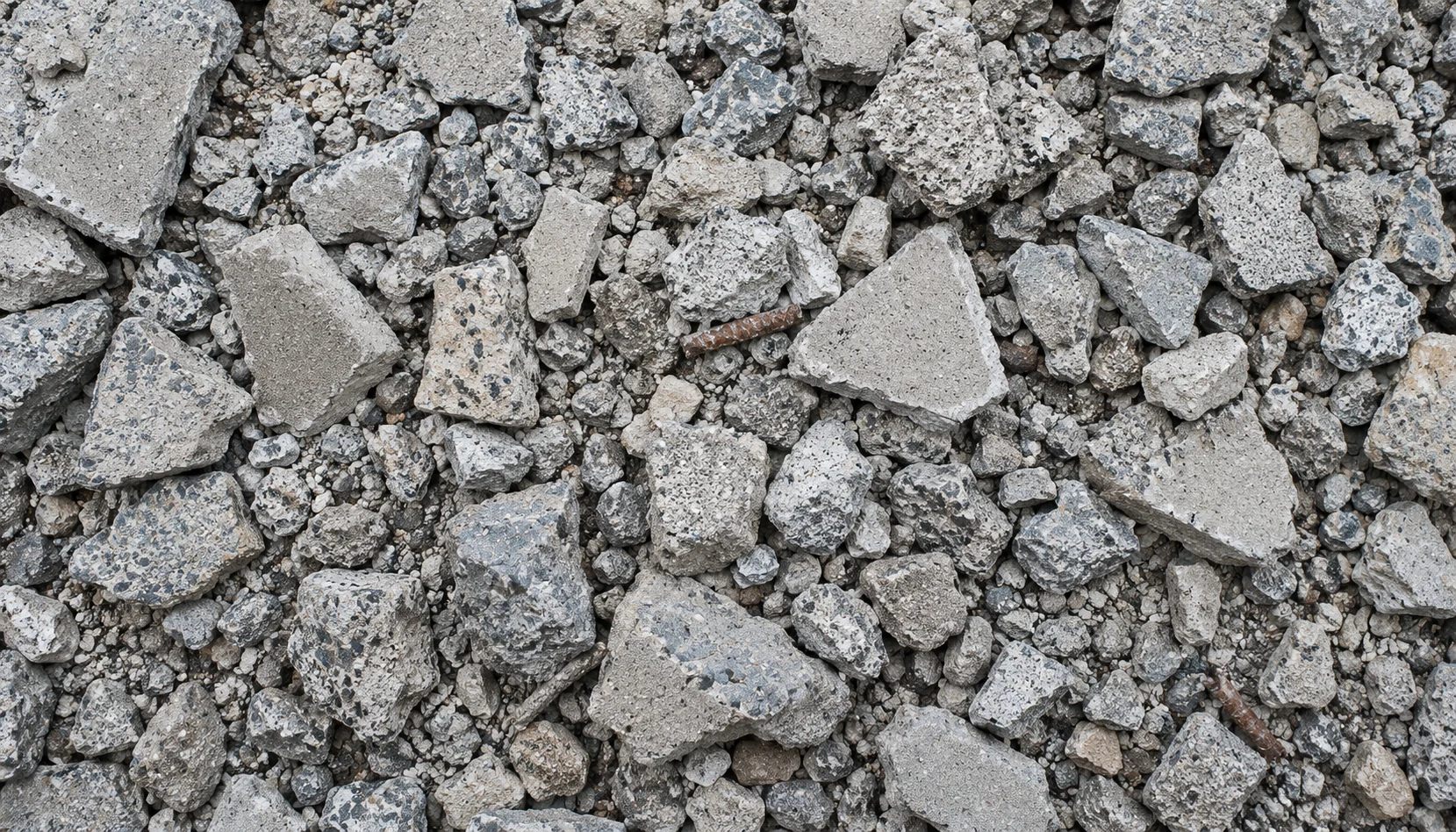
Every year, the global construction industry produces over 4 billion tonnes of concrete. When buildings reach the end of their lifespan, this raises a crucial question: what happens to all that concrete? The answer is encouraging — concrete is not only recyclable, but represents one of the most successfully recycled materials in the entire construction sector.
Can Concrete Really Be Recycled?
Yes. Old, hardened concrete from demolished buildings, roads, and infrastructure doesn’t need to end up in landfill. It can be processed and transformed into Recycled Concrete Aggregate (RCA) — a valuable material that finds a second life in new construction projects. The process is well-established, cost-effective, and increasingly standard practice for responsible contractors across the UK.
How Is Concrete Recycled? The Step-by-Step Process
Collection and demolition: Specialist equipment breaks up and extracts concrete structures from demolition sites. The material is transported to dedicated processing facilities equipped with powerful crushing machinery.
Crushing: Large crushers break down concrete chunks into smaller, manageable pieces. The process is carefully controlled to achieve the desired aggregate sizes whilst maintaining structural integrity. Modern facilities use multiple crushing stages for consistent quality.
Screening and sorting: This critical stage removes contaminants — steel reinforcement bars, timber, plastic, and other debris that could compromise the final product. Magnetic separators extract metal components; air classification removes lighter materials. The cleaned aggregate is then sorted by size into different grades for various applications.
The end result is high-quality RCA that meets industry standards. This processed material retains many beneficial properties of the original concrete whilst supporting sustainable construction practices. Understanding the role of aggregates in concrete helps explain why RCA can perform comparably to virgin material in suitable applications.
What Are the Main Uses for Recycled Concrete Aggregate?
Sub-base material is the most common application. RCA provides excellent stability and load-bearing capacity as a foundation layer beneath roads, car parks, and building foundations. Its angular shape creates strong interlocking between particles, making it ideal for supporting heavy loads.
New concrete production: When properly processed and tested, RCA can replace virgin aggregates in fresh concrete mixes. It’s typically used for non-structural applications such as kerbs, footpaths, and mass concrete pours, where lower-grade fill is acceptable and a lightweight, low-material option like foamed concrete is also worth considering. Advances in processing are expanding its potential uses.
Landscaping and fill: RCA’s durability and drainage properties make it excellent for retaining wall backfill, drainage layers, and land-raising projects. Its permeability helps manage water runoff whilst providing stable support.
Pipe bedding and temporary roads: RCA’s gradation and stability protect underground utilities during installation, and its immediate availability makes it valuable for temporary road construction on site.
What Are the Environmental and Economic Benefits of Recycling Concrete?
Concrete recycling delivers substantial benefits on both fronts. Construction and demolition waste accounts for a significant portion of landfill content across the UK — diverting concrete preserves capacity for non-recyclable materials and reduces disposal costs for contractors.
Processing RCA typically requires less energy than quarrying and processing virgin aggregates. Transportation distances are often shorter when using locally sourced demolished concrete, reducing emissions associated with material supply. This approach aligns with the eco-friendly concrete strategies now expected on environmentally certified projects.
Economically, RCA often costs 20–30% less than virgin aggregate materials. Combined with savings on waste disposal fees during demolition, the financial case for recycling is compelling.
For projects sourcing new concrete, Procon 24/7’s volumetric concrete service allows precise ordering — you only pay for what you pour, eliminating waste from over-ordering. Use our concrete calculator to estimate volumes accurately before any pour.
Frequently Asked Questions About Concrete Recycling
Is recycled concrete as strong as new concrete?
RCA can perform comparably to virgin aggregates in many applications, particularly sub-base and non-structural concrete. Quality depends on proper processing and contamination removal — well-processed RCA meets industry standards for specified applications.
How much does recycled concrete cost compared to new materials?
Recycled concrete aggregates typically cost 20–30% less than virgin material, though prices vary by location and availability. Additional savings come from reduced waste disposal fees during demolition projects.
Can all types of concrete be recycled?
Most standard concrete can be recycled effectively. Concrete containing hazardous materials, excessive contamination, or certain chemical additives may require special handling or may not be suitable for processing into RCA.
Where can I source recycled concrete aggregate?
Many quarries, concrete suppliers, and specialist recycling facilities offer RCA. Local waste management companies can provide information about nearby concrete recycling options and arrange collection services for demolition projects.